
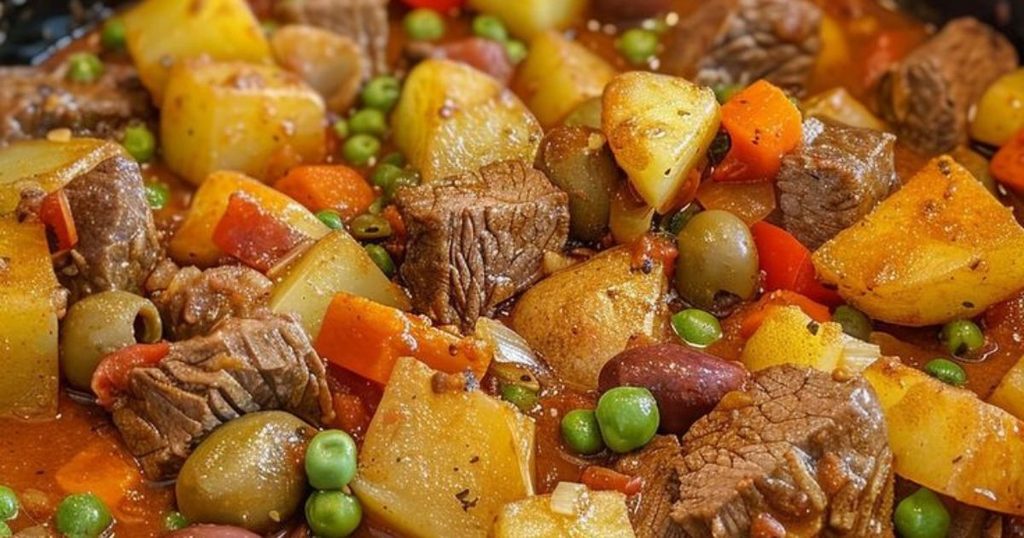
Caldereta de cordero is a traditional Spanish lamb stew made with tender meat, vegetables, herbs and a rich, slow-cooked sauce. It is a comforting dish with several regional variations across Spain.
What Is Caldereta de Cordero?
If you are searching for best caldereta de cordero near me, choosing a restaurant that specialises in traditional Spanish cooking can give you a better chance of finding an authentic and well-prepared version.
The dish is associated with traditional Spanish cooking and has regional variations. Many versions begin by browning pieces of lamb before cooking them slowly with ingredients such as onion, garlic, tomato, paprika, herbs and liquid until the meat becomes tender. Some preparations also include potatoes.
It is rustic rather than elaborate. Instead of relying on complicated presentation, the dish gets its character from good lamb, patient cooking and a sauce that develops flavour over time.
This also means that two restaurants may serve noticeably different versions while both remain recognisable as caldereta.
What Should a Good Lamb Caldereta Taste Like?
A well-made lamb caldereta should taste rich and savoury without simply feeling greasy or heavy.
The lamb is the main attraction. It should be tender enough to eat comfortably but should still retain its texture rather than breaking down into an indistinct mixture.
The sauce may vary considerably depending on the recipe. You might notice:
- Garlic and onion forming the savoury base
- Tomato adding body and mild acidity
- Paprika contributing warmth and depth
- Bay leaf, thyme or other herbs adding aroma
- Potatoes absorbing the cooking juices
- A reduced sauce coating the pieces of lamb
Some traditional preparations use wine during cooking, so diners who avoid alcohol for dietary or religious reasons should always ask the restaurant directly about the recipe before ordering. Restaurant recipes are not always listed in full on menus.
A good caldereta should ultimately taste balanced. No single seasoning should completely overpower the flavour of the lamb.
Where Are You Most Likely to Find It?
If you are searching locally, start with restaurants specialising in Spanish regional or traditional cuisine.
General European restaurants may serve lamb casseroles, but they are less likely to offer caldereta specifically.
Spanish restaurants
A traditional Spanish restaurant is the most obvious place to check. Look beyond tapas-only venues and search for restaurants offering substantial regional dishes, stews and slow-cooked meats.
Menus containing dishes described as guisos, platos tradicionales or regional Spanish specialities may be particularly promising.
Restaurants specialising in regional Spanish cooking
Caldereta appears in different parts of Spain, with some well-known versions associated with areas such as Extremadura. Recipes can differ significantly between locations and families.
Restaurants that identify themselves with a particular Spanish region may therefore be more likely to serve an authentic regional interpretation than a venue offering only widely recognised tapas.
Spanish food events and seasonal menus
Rustic stews often appear as specials rather than permanent menu items.
It can therefore be worth checking:
- Seasonal restaurant menus
- Spanish cultural festivals
- Regional food events
- Chef’s specials
- Weekend menus
- Winter menus
A restaurant may prepare caldereta occasionally even when it does not appear on its standard online menu.
How to Search More Effectively Online
Searching only one phrase can limit your results because restaurants may describe the same dish differently.
Try searches such as:
- Spanish lamb stew
- traditional Spanish lamb stew
- cordero guisado
- lamb casserole Spanish restaurant
- Spanish lamb dishes
- traditional Spanish restaurant near me
- regional Spanish food near me
Google Maps and restaurant platforms can also be useful because menu photographs sometimes reveal dishes that do not appear in searchable website text.
Look through customer photographs as well as written menus.
A dish may simply be listed as “lamb stew” in English while the restaurant uses its Spanish name on the printed menu.
Check the Menu Before Travelling
Caldereta is not necessarily available every day.
Slow-cooked dishes can require considerable preparation, and some traditional restaurants produce them in limited quantities. That makes checking availability especially useful if you are travelling specifically for the dish.
Before visiting, check the restaurant’s:
- Current online menu
- Social media pages
- Daily specials
- Recent customer photographs
- Seasonal menu
- Booking page
If you still cannot confirm availability, calling the restaurant may save you an unnecessary journey.
A straightforward question such as, “Do you currently serve caldereta de cordero or a traditional Spanish lamb stew?” should make your request clear.
How to Judge Whether a Restaurant Serves a Good Version
Online reviews can help, but star ratings alone rarely tell you whether one particular dish is worth ordering.
Instead, search reviews for comments specifically mentioning lamb, stews or traditional Spanish food.
Look for detailed customer comments
Useful reviews tend to describe something concrete.
For example, comments mentioning tender meat, rich sauce, generous portions or authentic home-style cooking are more informative than a general statement such as “great food”.
Recent reviews are especially useful because chefs, menus and suppliers can change.
Examine customer photographs carefully
Professional restaurant photography is useful for presentation, but customer photos can give you a more realistic idea of portion size and consistency.
For a rustic stew, you would generally expect visible pieces of lamb and a substantial sauce rather than an excessively thin broth.
However, presentation varies, so appearance alone should not determine your choice.
Look at the wider menu
A restaurant’s overall menu can tell you a lot.
A venue offering several slow-cooked Spanish dishes, regional recipes and traditional ingredients may be more likely to understand the cooking style behind lamb caldereta than a restaurant where it appears as an isolated item among unrelated cuisines.
Questions Worth Asking Before Ordering
If authenticity or dietary suitability matters to you, asking a few questions can be useful.
You could ask:
Is the lamb cooked slowly?
Traditional stew-style preparations normally rely on slower cooking to soften suitable cuts of lamb.
Does the sauce contain wine?
Many recipes do, although not every version will. One modern Spanish-style preparation, for example, includes white wine alongside tomato, onion, garlic and paprika.
Is the lamb halal?
Never assume that lamb is halal simply because lamb itself is permissible. If halal certification or sourcing matters to you, ask the restaurant directly about both the meat and preparation process.
Is it available today?
This is particularly important when the dish is offered as a special.
Does it contain liver or offal?
Some traditional recipes may use lamb liver as part of a thickening or flavouring mixture, while many other versions do not.
Asking beforehand helps avoid surprises.
What Usually Comes with Caldereta?
The accompaniments depend on the restaurant and regional interpretation.
Potatoes are common in some preparations, either cooked directly in the stew or served alongside it. Bread is another natural accompaniment because it works well with the rich cooking sauce.
Some restaurants may serve the dish more simply, particularly when they want the lamb to remain the main focus.
If the portion is substantial, you may not need many additional side dishes.
Traditional Does Not Mean Every Recipe Is Identical
One mistake when searching for Spanish regional food is assuming there must be a single definitive recipe.
Traditional dishes often develop through local customs, household preferences and available ingredients.
One cook may use more tomato. Another may concentrate on paprika and herbs. Potatoes may be cooked inside the stew in one version and served separately in another.
Traditional descriptions also show that lamb caldereta can include combinations of onions, peppers, garlic, herbs and paprika, with different preparation methods depending on the region or recipe.
Variation is therefore not automatically a sign that a restaurant is serving an inauthentic dish.
The more useful question is whether the ingredients and cooking method produce a satisfying slow-cooked lamb stew that respects its Spanish character.
What If You Cannot Find Caldereta Locally?
Depending on where you live, finding this exact dish may be difficult.
In that situation, search for closely related menu descriptions rather than giving up completely.
Spanish restaurants may offer:
- Cordero guisado
- Lamb stew
- Braised lamb
- Spanish lamb casserole
- Slow-cooked lamb
- Regional lamb dishes
These are not automatically the same dish, but they may provide a similar dining experience.
You could also ask a Spanish restaurant whether caldereta appears occasionally as a seasonal special.
Restaurants sometimes prepare dishes that are not advertised widely online.
Common Mistakes When Choosing a Restaurant
The first common mistake is selecting a restaurant purely because it appears first in search results.
Ranking position does not necessarily tell you which restaurant prepares the dish best.
Another mistake is relying entirely on overall ratings. A highly rated restaurant might specialise in seafood or tapas rather than traditional lamb dishes.
Also avoid assuming that every restaurant uses the same ingredients. If you have allergies, religious dietary requirements or strong preferences regarding alcohol or offal, check directly.
Finally, do not assume an older online menu is still accurate. Restaurant menus frequently change.
Things to Check Before Choosing a Restaurant
Check the latest menu, customer reviews, photographs, ingredients and whether the dish is currently available. If dietary requirements matter to you, contact the restaurant directly before visiting.
For anyone trying to find best caldereta de cordero near me, these simple checks can make it easier to choose a suitable restaurant and avoid travelling somewhere that does not currently serve the dish.
Frequently Asked Questions
Is caldereta de cordero the same as lamb stew?
The phrase is commonly translated as Spanish lamb stew, but caldereta refers to a particular tradition of stew-style cooking rather than every dish containing stewed lamb.
Is caldereta usually spicy?
Not necessarily. Paprika and other seasonings can create warmth and depth, but the dish does not have to be strongly hot. Recipes vary considerably.
Does lamb caldereta contain potatoes?
Some versions do. Potatoes may cook directly in the stew, where they absorb flavour and can also help give the sauce more body. Other recipes serve them separately or omit them.
Can I find halal caldereta?
Possibly, but it depends entirely on the restaurant. Ask whether the lamb is halal and whether any non-halal ingredients, including cooking alcohol, are used in preparation.
Is it normally available all year?
That depends on the restaurant. Because it is a hearty slow-cooked dish, some establishments may offer it seasonally or as an occasional special rather than keeping it permanently on the menu.
Conclusion
Finding an excellent lamb caldereta locally is easier when you search beyond the exact Spanish dish name. Traditional Spanish restaurants, regional menus and slow-cooked lamb specials are good places to start.
Check recent menus and customer reviews, and ask about availability, ingredients and halal suitability when these details matter to you. The best versions tend to keep things relatively simple: good lamb, patient cooking, balanced seasoning and a rich sauce that makes the dish feel genuinely comforting.