
Ordering takeaway sounds simple: choose the dish, place the order and wait for it to arrive.
But there is a small part of the journey that can have a big effect on what ends up on the table: the packaging.
A curry, burger, fish and chips or a pasta dish does not behave the same way once it leaves the kitchen. Heat builds up, steam collects, sauces move around and fried food slowly loses its crunch. The container has to deal with all of that while the order is being carried across town.
That is why there is no single “best” takeaway packaging material. Paper, plastic, bagasse and aluminium each solve different problems.
Usually, the food should decide first.
Why paper is still so common
url: paper-food-packaging-mbpak
alt: Paper Food Packaging MBPAK
Paper and paperboard are familiar choices for takeaway food because they are lightweight, easy to handle and suitable for many everyday meals.
A well-designed paper box can work nicely for burgers, sandwiches, noodles and bakery items. It can also give a takeaway order a clean, simple appearance without adding much weight.
Moisture is where things get more complicated.
Very wet or greasy food puts more pressure on paper packaging, especially when the meal sits in the container for a while. Coatings and construction can improve performance, but a paper box designed for a burger may not be the best choice for a bowl of curry.
When plastic makes more sense
Plastic containers are useful where moisture control and a secure closure are especially important.
Rigid plastic formats can provide tight-fitting lids and clear visibility, which can be helpful for salads, rice dishes, sauces and meals where customers want to see the contents before opening the container.
For delivery, that secure closure can be valuable. Nobody wants to open a takeaway bag and find that curry sauce has leaked into the bottom.
That does not mean plastic is automatically the better choice. It means it can perform well in situations where sealing and moisture resistance matter more than the look or feel of another material.
Why bagasse is popular for some meals
Bagasse is made from sugarcane fibre and has become a familiar fibre-based option in foodservice.
Its moulded structure gives many bagasse containers a solid feel, making them useful for certain hot meals, bowls and clamshell-style formats.
But it is not a universal replacement for every other material.
A dry rice dish and a very sauce-heavy meal create different demands. Temperature, moisture and delivery time can all affect how a container performs, so the material still needs to be matched to the food.
Where aluminium fits in
url: aluminium-food-packaging-mbpak
alt: Aluminium Food Packaging MBPAK
Aluminium foil containers are often used for foods that need strong heat tolerance.
They can work particularly well for baked or roasted dishes and meals that need to stay stable during handling. They are also useful in situations where oven-related cooking or reheating is involved.
The trade-off is presentation. Unlike clear plastic, aluminium does not let customers see the food before opening it.
That may not matter for a curry or baked pasta, but it can matter more for meals where appearance is part of the appeal.
Delivery changes everything
A meal eaten five minutes after collection has an easier packaging journey than one that spends half an hour in a delivery vehicle.
That extra time matters.
Steam can make chips soft. Condensation can leave bread damp. Sauces can find weak seams, while containers can shift when several orders are stacked together.
This is why restaurants need to think about packaging according to how the food behaves.
A burger business may care more about ventilation and grease control. A curry restaurant may prioritise leak resistance and lid security. A café selling pastries may need protection from crushing.
One restaurant can easily need several packaging formats.
Is the cheapest container really cheaper?
Not always.
Takeaway packaging is often purchased in large quantities, so a small difference in price per container can look attractive. But a cheap container that leaks, collapses or damages food can create other costs.
There may be refunds and complaints, but also less obvious problems: double-packing, wasted food, extra storage space or staff spending more time assembling orders.
Oversized containers can create a similar issue. Bigger does not automatically mean better. Too much empty space gives food room to move around during delivery.
A good container should fit the meal reasonably well.
What customers actually notice
Most diners are not thinking about paper GSM, barrier layers or technical material specifications.
They notice the result.
Was the burger still warm? Were the fries reasonably crisp? Did the sauce stay where it belonged? Did the box hold together? Was the order easy to carry from the front door to the kitchen table?
Those simple questions are probably a better test of packaging than the label on the outside.
Sustainability is part of the decision
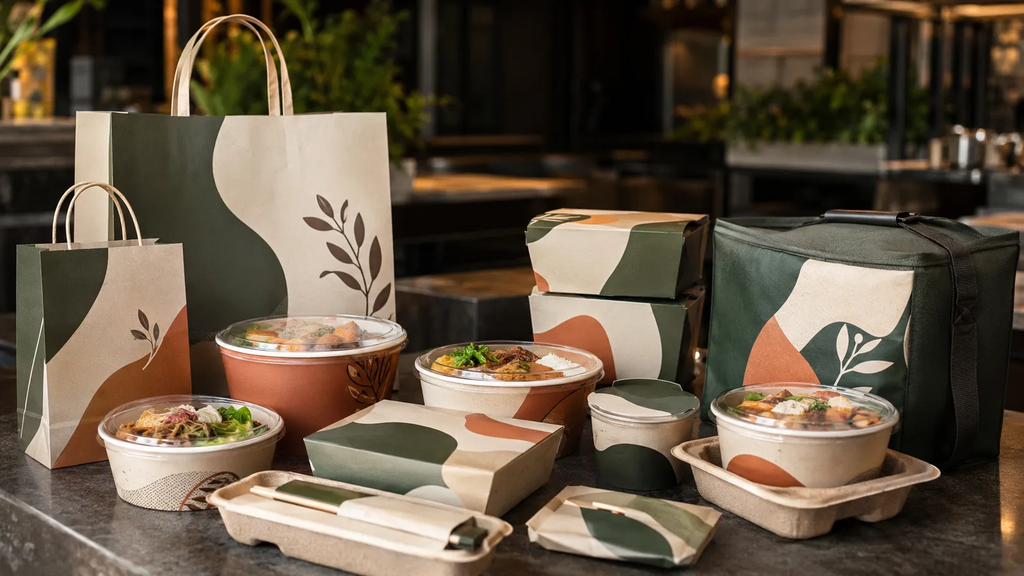
url: sustainability-food-packaging-mbpak
alt: Sustainability Food Packaging MBPAK
Environmental considerations are becoming more important, but material labels do not tell the whole story.
Recyclable, compostable, paper-based and fibre-based packaging can all have a role, yet the practical answer depends on how the package is used, what coatings it contains and what local waste systems can actually process.
There is also a food-waste question.
If a container prevents a meal from leaking, collapsing or being ruined during transport, it is already protecting something valuable.
The more useful approach is to look at material use, food protection, delivery performance and disposal together.
The best material depends on the meal
Paper, plastic, bagasse and aluminium are not really competing for one universal winner.
They are simply better suited to different situations.
A burger may work well in a structured paper box. Soup needs reliable leak protection. A salad may benefit from visibility. An oven-ready meal may be perfectly suited to aluminium.
The smartest takeaway packaging is the one that matches the food, the journey and the way the customer will actually eat it.
The meal may be chosen from a menu in seconds, but packaging still has a role in whether that choice arrives the way the customer expected.