

Every British child who ever hesitated over a plate of steamed carrots was told the same wartime fable: eat your vegetables or you will end up needing thick lenses to read the blackboard. The Ministry of Information concocted that story during the Blitz to disguise the invention of airborne radar, attributing the RAF’s night-fighter interception success to an abundance of carotene. Decades later, the idea that a specific dinner recipe can throw away your spectacles remains remarkably stubborn.
The biological reality is more grounded. Nutrition cannot physically shorten an elongated myopic eyeball or reshape an unevenly curved cornea. If you have a refractive error, eating bowls of spinach will not replace clinical vision correction. What a targeted nutritional intake can do is fundamentally alter how your retinal cells process light, protect the delicate microvasculature behind the eye, and preserve functional clarity across your lifespan.
The Macular Pigment: Nature’s Optical Shield
Inside the central retina sits the macula, the tiny anatomical zone responsible for sharp, high-resolution central vision. This region relies on two specific dietary carotenoids: lutein and zeaxanthin. Unlike general metabolic nutrients, these compounds accumulate directly in the retina, forming a yellow-tinted layer called the macular pigment.
This pigment functions as an internal optical filter against high-energy shortwave blue light and oxidative stress. When your macular pigment density is high, your eyes recover from harsh glare much faster and interpret subtle edge contrast more cleanly. You will still need your distance glasses to resolve the fine registration numbers on far-off road signs if your eyeball is structurally long, but optimal pigment density means the image hitting your brain is sharper, richer, and less susceptible to visual wash-out in bright daylight.
Your body cannot synthesise these carotenoids on its own. They come entirely from food. Dark, fibrous leafy greens like cavolo nero, spinach, and Swiss chard provide the highest natural concentration of lutein. Zeaxanthin is found in orange peppers, sweetcorn, and egg yolks. Because carotenoids are fat-soluble, eating raw greens without an accompanying lipid yields poor absorption. Tossing your greens in cold-pressed olive oil or eating them alongside whole eggs ensures the nutrients actually cross the intestinal wall and reach the bloodstream.
Tear Film Stability and Omega-3 Fatty Acids
Most people think of the cornea as the primary front lens of the eye, but the very first refractive surface that light encounters is your tear film. If this microscopic layer of moisture breaks apart between blinks, light scatters across the cornea, causing temporary visual blur that feels like a fluctuating prescription.
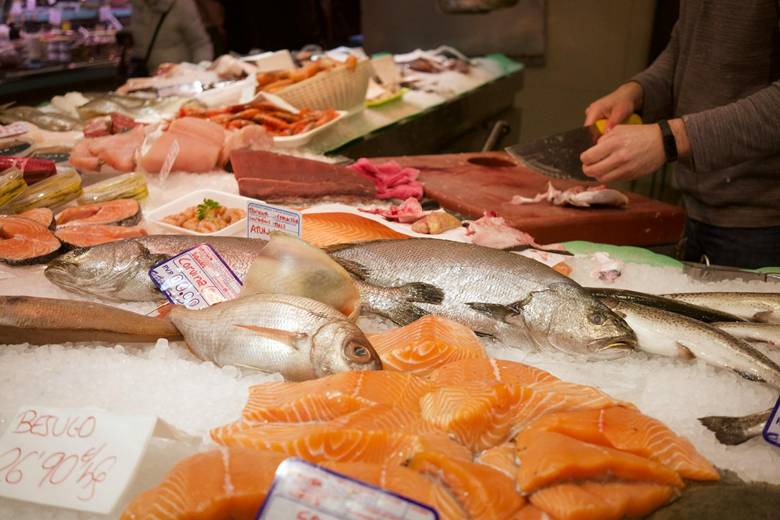
This is where oily cold-water fish like mackerel, wild salmon, sardines, and trout play an active role in daily eye health. These fish are rich in long-chain omega-3 fatty acids, specifically EPA and DHA. DHA is a major structural lipid in retinal photoreceptor membranes, while EPA helps regulate systemic inflammatory responses.
Omega-3s also directly improve the secretions produced by your meibomian glands along the rims of your eyelids. These glands produce a thin lipid layer that floats on top of your tears to stop rapid evaporation. A diet lacking healthy fats often leads to evaporative dry eye, leaving the surface feeling gritty and causing digital text to float in and out of focus. Eating oily fish twice a week or taking a clean algae-based alternative helps stabilise this lipid layer, keeping your vision consistently clear during long workdays.
Vascular Protection and Retinal Microcirculation
The retina consumes oxygen at an extraordinary rate relative to its mass. To support this metabolic demand, it relies on a dense network of microscopic capillaries. Maintaining elastic, healthy blood vessels is just as vital for clear sight as having the correct prescription glasses resting on your face.
Polyphenols and anthocyanins, the deep purple and dark red pigments found in bilberries, blackberries, and blackcurrants, support capillary wall integrity and improve local microvascular perfusion. During the day, visual processing generates reactive oxygen species within photoreceptor cells. Anthocyanins neutralise these free radicals before they can damage delicate cell membranes.
Citrus fruits, strawberries, and red bell peppers supply high levels of Vitamin C, while sunflower seeds and almonds provide natural Vitamin E. These two antioxidants work together to protect cellular structures from oxidative breakdown. Zinc, found abundantly in pumpkin seeds, lentils, and lean red meat, acts as the essential cofactor that mobilises vitamin A from the liver into the retina, where it produces rhodopsin, the biological pigment required for low-light vision.
Real Food Versus Synthetic Supplements
The retail market is packed with bottles claiming to contain miraculous vitamins for eyes, often promising to reverse age-related deterioration within weeks. While clinically validated formulations like the AREDS2 combination have proven value for patients with diagnosed macular degeneration, healthy individuals gain far more physiological benefit from whole food sources.
Nutrients within a balanced, healthy diet do not operate in isolation. An orange provides Vitamin C alongside bioflavonoids, natural water content, and dietary fibre that moderate absorption rates. A handful of walnuts delivers Vitamin E alongside plant-based ALA fatty acids and trace minerals. High-dose isolated supplements can occasionally cause metabolic friction, such as excessive zinc intake interfering with copper absorption over time.
Prioritising whole foods builds a resilient foundation that protects ocular tissues against premature cellular ageing, diabetic microvascular damage, and environmental strain.
Balancing Nutrition with Clinical Care
No amount of superfoods, leafy salads, or oily fish will alter the mechanical focal length of an eye. If genetic traits, eye shape, or natural age-related lens stiffening leave you reaching for your distance glasses while driving, accepting the physics of optical lenses is practical common sense.
Booking regular eye tests with a qualified high-street optician remains the only reliable way to measure intraocular pressure, inspect the optic nerve head, and ensure your vision is properly corrected. Nutrition provides the biochemical defence and cellular fuel your visual system needs to operate at its absolute best, while precision optical lenses handle the physics of focusing light.
Eating well is not a magic cure to discard your spectacles. It is an enduring physiological investment in the living neural tissue that allows you to see clearly in the first place.