
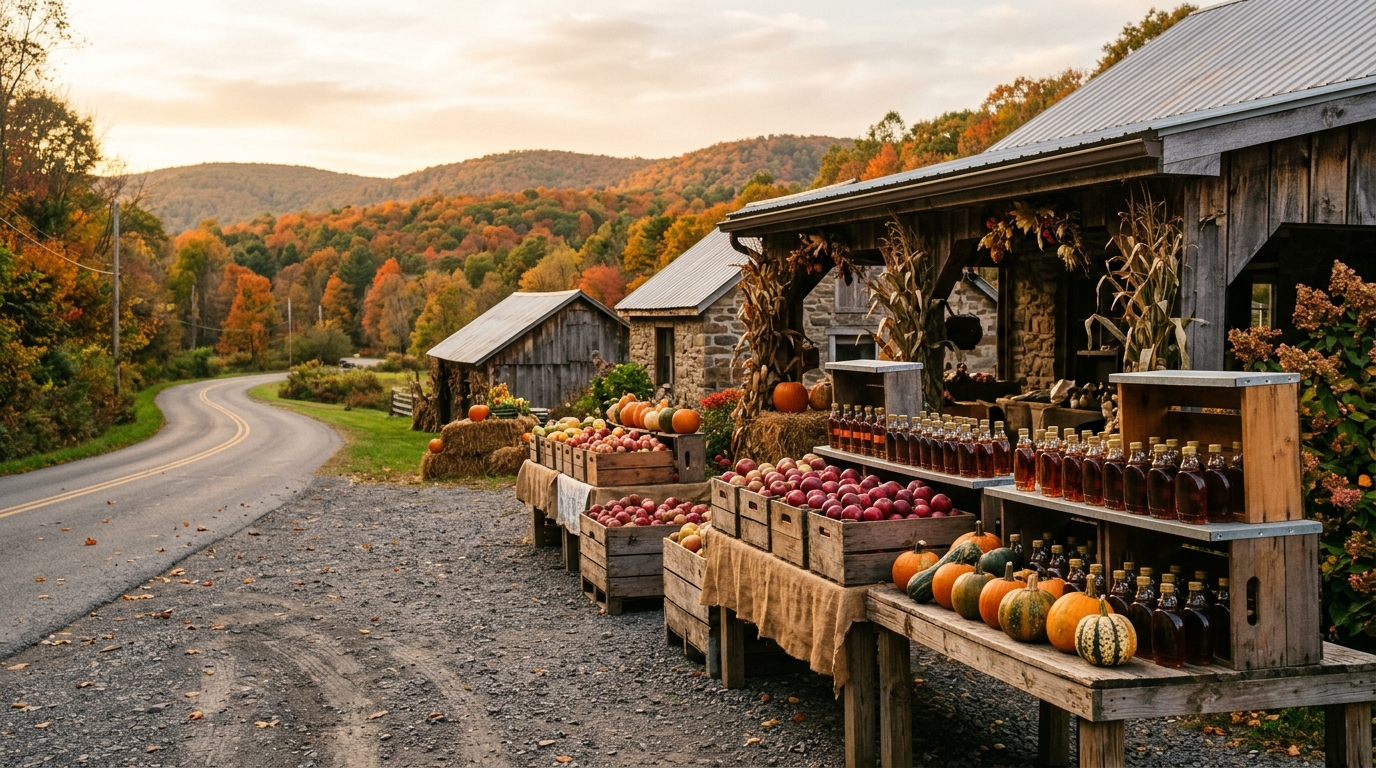
The Pantry of the Alleghenies
Western Pennsylvania’s northern tier sits where glacier-carved valleys, old-growth hemlocks, and quiet rivers meet. The land shapes what people eat here, and the pace of the eating. Visitors who linger past a weekend start to notice the rhythm.
Small farms thrive on valley floors, dairy herds dot the ridges, and local orchards hold apple varieties you rarely see on supermarket shelves.
Visitors tend to arrive expecting diner food and leave surprised. The region’s kitchens blend German, Polish, Italian, and Appalachian traditions. The result is honest, seasonal, and generous.
Diners, Luncheonettes, and Church Suppers
A short drive through any county here turns up classic American diners that still make everything from scratch. Pot roast, chicken and waffles, scrapple, and biscuits with sausage gravy are regulars on breakfast menus.
Weekend church suppers remain a quiet local tradition. Volunteers set up folding tables, pour coffee, and serve pierogi, haluski, or roast beef dinners for a modest donation.
Travelers are welcome, and the conversation is as much a part of the meal as the food. If a stranger sits across from you, they will not stay a stranger long.
Markets to Know
Farmers markets in towns like Clarion, Brookville, and Ridgway run from late spring through October. You will find pastured eggs, maple syrup pressed on nearby ridges, raw honey, and heirloom tomatoes in high summer.
Many stalls accept cash only, so small bills help. Arrive early for bakery stalls, since the sticky buns and sourdough loaves often sell out by nine.
Forest-to-Table Flavors
A quieter part of the region’s food culture happens outside restaurants. Residents who grew up here still forage ramps in April, pick wild blueberries in July, and gather chanterelles after late-summer rains.
These ingredients turn up at private tables, farm dinners, and the occasional pop-up supper. The season you visit will shape the plate you are offered.
For a traveler who wants to try the woods on a plate, autumn is the ideal time to come. Cider pressings, apple butter boil-downs, and chestnut roasts anchor small-town weekends.
The smell of wood smoke, cider, and hemlock needles after rain tends to linger as a memory. It is one of those regional details that cannot really be photographed.
Where to Base a Food-Focused Weekend
A relaxed food trip benefits from a quiet base in the forest rather than a hotel strip. Towns along Route 36 and the Clarion River put you within a short drive of farmers markets, roadside bakeries, and family diners that open at six.
For travelers who want simple, independent lodging close to this food geography, a family-run cabin property in Pennsylvania near Cook Forest places you minutes from local orchards, diners, and roadside produce stands. Having your own kitchen also makes it easier to cook with what you buy.
Plan your drives in loops. Pair a farm stop with a diner, a market with a bakery, and leave an hour open for the detour you did not plan.
Mornings are easier when the coffee pot is already on and the porch faces east. Afternoons are better when you have somewhere unhurried to return to.
Local Dishes Worth Seeking Out
A few regional plates deserve a spot on your itinerary. Pierogi, pan-fried in butter with onions, is a staple at family-run diners.
Haluski, which combines sauteed cabbage with egg noodles and a little bacon, is comfort food in its purest form. Chicken and waffles are a Sunday classic, especially in the southern counties.
Buckwheat pancakes at a Sunday morning counter, bowls of chicken corn soup, and pie slices leaning toward rhubarb or wild berry in season are also worth seeking out. If a server mentions a special, order it.
The region’s food is at its most interesting when it is seasonal, and the specials board is where seasonality shows up first. Eat slowly, and ask what grows on the farm down the road. The answer is often the plate in front of you.
