
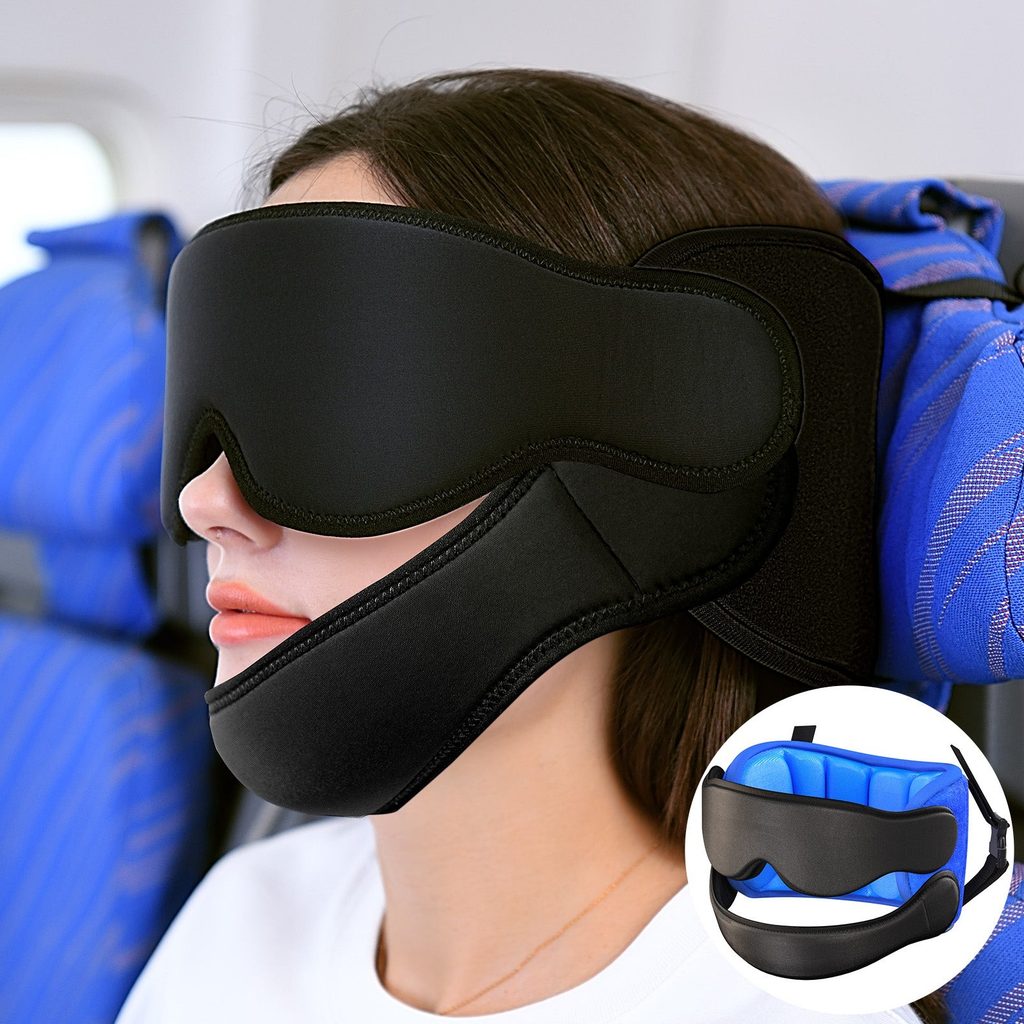
If you’ve ever jolted awake mid-flight because your chin dropped to your chest, you already know why standard neck pillows often fail. They handle side-to-side movement reasonably well but do nothing to stop your head from tipping forward, which is exactly how most people naturally fall asleep when their neck muscles finally relax. This is a common frustration for anyone who travels regularly for work or takes long overnight buses and trains, where a few hours of real sleep make a measurable difference the next day. The fix isn’t about finding a softer pillow, it’s about finding one designed specifically to catch forward head movement. This article looks at why chin drop happens, what kind of support actually prevents it, and how to set it up so you get uninterrupted rest instead of waking up every twenty minutes.
Why Your Head Drops Forward in the First Place
When you’re upright and awake, your neck muscles constantly make small adjustments to keep your head balanced. The moment those muscles relax during sleep, gravity takes over, and for most people that means the head tips forward rather than to either side, since the weight of the skull naturally pulls that direction when sitting upright. A basic horseshoe-shaped pillow supports the sides of your neck but leaves this forward motion completely unaddressed, which is why so many people wake up repeatedly rather than getting continuous sleep.
A pillow built with front support, sometimes called a chin hold travel pillow, closes this gap by adding a brace or panel that catches the chin before it can drop too far. This kind of design works with your body’s natural sleep posture instead of fighting against it, which is a meaningfully different approach than simply adding more padding to the sides.
How Chin Support Differs From Standard Designs
The mechanics are fairly simple once you see them in action. Instead of a single loop around the neck, chin-support designs typically include an additional strap or panel that extends up toward the jaw, creating a resting point that stops the forward tip at a much smaller angle than an unsupported drop would allow.
Getting the Most Out of Chin Support Pillows
Fit matters even more with this style than with standard neck pillows, since the chin panel needs to sit at the right height to actually make contact when your head starts to drop. Too low and it does nothing; too high and it can feel like it’s pushing your chin upward uncomfortably. Spend a minute adjusting the strap while seated upright before you try to actually sleep, checking that the support sits just below where your chin naturally rests.
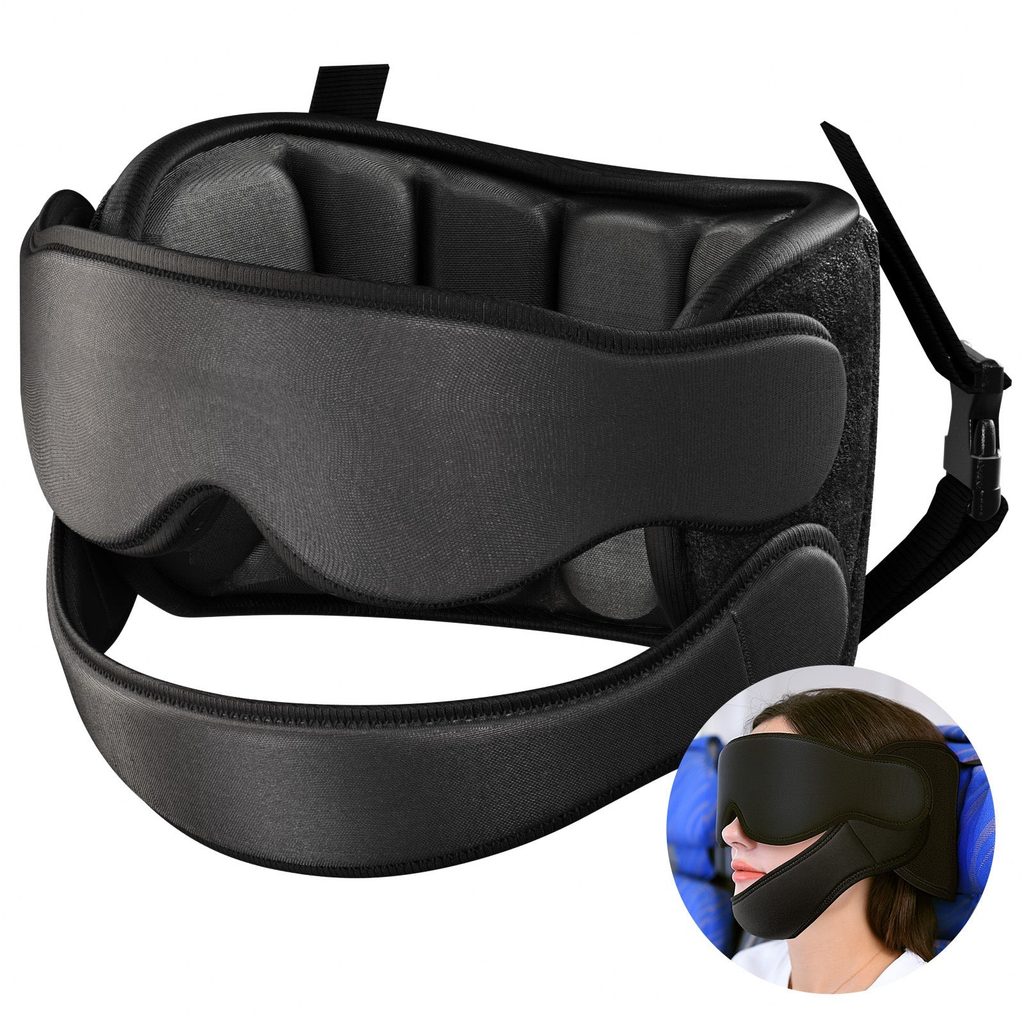
Reclining your seat even slightly changes the angle your head needs to travel before dropping, so pair the pillow with whatever recline your seat allows for a more effective setup. On buses or trains with limited recline, tightening the chin strap a bit more than you would on a fully reclined plane seat can help compensate for the more upright position.
Who Benefits Most From This Style
People who already know they’re forward sleepers, rather than side sleepers, get the clearest benefit from this design. If you’ve tried multiple standard pillows and kept waking up with your head bobbing forward regardless of brand or price, a chin-support structure addresses the actual mechanical problem rather than just adding more general cushioning.
Caring for Your Pillow Between Trips
Straps and panels on chin-support designs see more tension than a basic pillow, so checking stitching and closures periodically helps the pillow hold up over repeated use. Sarisun builds its supports with this kind of frequent adjustment in mind, aiming for straps that stay reliable trip after trip rather than loosening or wearing out quickly.
Solving Chin Drop for Good
If forward head drop has been ruining your in-flight sleep, the fix isn’t a softer pillow, it’s one built to actually catch that motion. Getting the fit right, matching it to your seat’s recline, and choosing a design with dedicated chin support turns a frustrating cycle of waking up every few minutes into something closer to real, uninterrupted rest.