
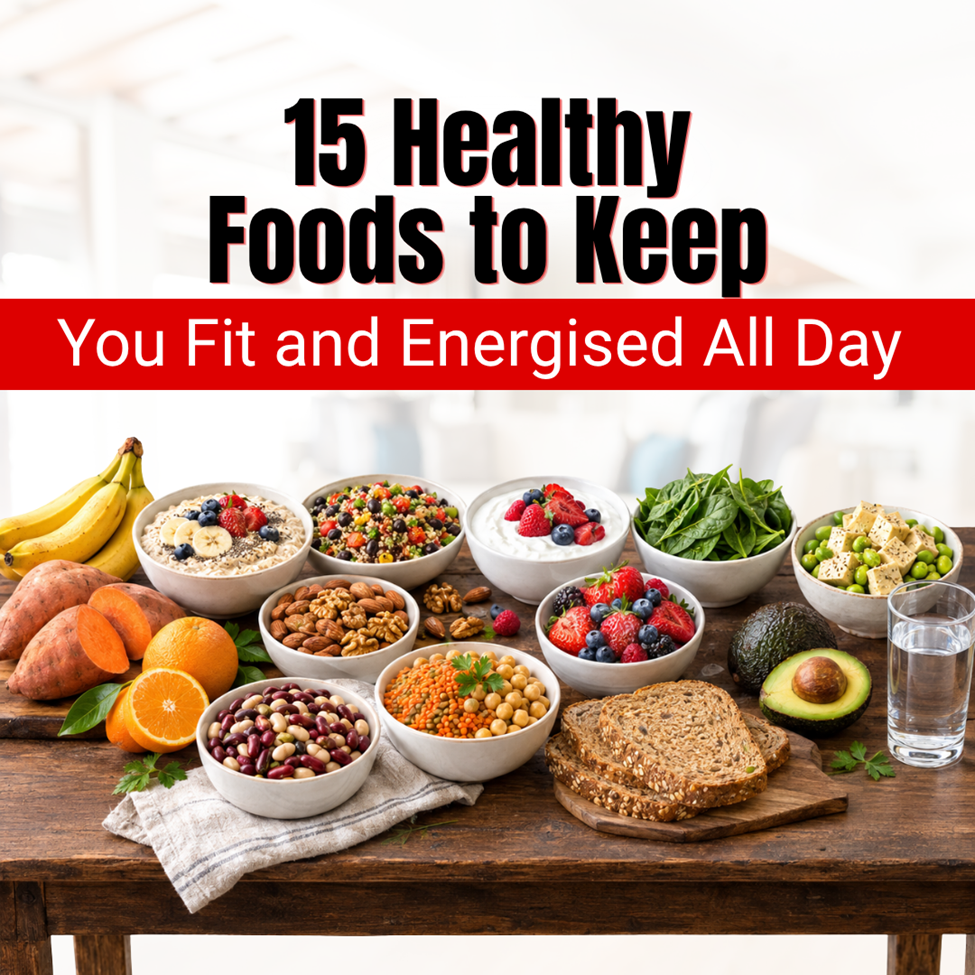
It’s 3 pm. You’ve had a sandwich, two cookies and a third coffee, and your legs feel like wet sand. Most of us blame being tired or busy. Often the real culprit is what’s on the plate. The right healthy food won’t turn you into an athlete overnight, but it does change how you feel by mid-afternoon.
You don’t need a punishing diet or a gym membership. You need habits small enough to survive a busy Tuesday.
The best healthy food for steady energy mixes slow carbohydrates, protein, unsaturated fats and plenty of fruit, vegetables and water. No single food does the job alone. Pair a balanced plate with regular movement, and even ten minutes of bouncing on anin-ground trampoline a day can make that routine easier to keep.
This guide covers 15 everyday foods that help with energy, muscle recovery and general fitness. None of them is exotic. You’ll find them in any UK supermarket, and plenty are cheap. We’ll also look at easy ways to move more at home, from rope skipping to a few minutes of bouncing on a trampoline.
Which Healthy Food Gives You the Most Energy?
Carbohydrates give the quickest energy, protein repairs muscle and fats keep you full. The best foods for fitness cover at least one of those jobs without piling on sugar or salt. Here are 15 that do it well. I’ve ordered them roughly as you’d eat through a day, starting with breakfast fuel and finishing with a drink.
1. Bananas for Quick Energy
A banana is a carbohydrate hit in its own packaging. It also has potassium, which your muscles use when they contract. Eat one 30-45 minutes before exercise, and it’s usually gentle on the stomach. Choose one that’s yellow with a few freckles. Greener ones are firmer and release their sugar more slowly.
2. Oats for Long-lasting Energy
Oats are one of the best breakfast choices for steady energy. They contain complex carbohydrates and a fibre called beta-glucan, which slows digestion. That’s why a bowl at 7 am can carry you through to lunch. Skip the sugary sachets. Plain oats with fruit and a spoon of nut butter do the same job and taste better.
3. Quinoa and Black Beans for Muscle Repair
Quinoa is important among grains because it contains all nine essential amino acids, the building blocks of protein. Black beans add more protein plus fibre. Together they make a filling base for a burrito bowl or a quick lunchbox.
4. Greek Yoghurt for Protein and Bone Health
Thick Greek-style yoghurt packs more protein than ordinary yoghurt and brings calcium for your bones. Nutrition varies a lot between brands, so check the label. The flavoured pots can hide a surprising amount of sugar. Buy plain and add berries yourself.
5. Spinach for Vitamins and Minerals
Spinach is rich in folate and vitamin K, and it also contains iron. Your body absorbs plant iron better when it arrives with vitamin C, so add a squeeze of lemon or some tomato. Toss a handful into a smoothie or a curry.
6. Nuts for Healthy Fats and Lasting Fullness
Almonds and walnuts bring unsaturated fats, plus a little protein and fibre. They’re also dense in calories, which is why a small handful (about 30 g) is plenty. Unsalted is best. A palm-sized portion in your bag stops that 4 pm trip to the vending machine.
7. Berries for Fibre and Plant Compounds
Blueberries, strawberries and raspberries give you fibre, vitamin C and natural plant compounds called anthocyanins. Frozen berries are just as useful as fresh. Tip them over porridge or blend them into a post-exercise shake.
8. Tofu and Edamame for Protein and Omega-3
Tofu and edamame both come from soya. Tofu is a flexible protein that soaks up whatever sauce you give it. Edamame beans are the young soya pods. They supply protein and a small amount of plant omega-3 (called ALA).
9. Sweet Potatoes for Carbohydrates and Vitamin A
Sweet potatoes give you steady energy and plenty of beta-carotene, which your body turns into vitamin A. Bake one in its skin for extra fibre. They’re a good evening carbohydrate after a hard session.
10. Beans for Plant Protein
Kidney beans, cannellini beans, butter beans and even baked beans are protein, fibre and slow carbohydrate in one tin. Three heaped tablespoons of beans count as one of your five a day. Look for baked beans labelled reduced sugar and salt.
11. Wholegrain Bread
Wholegrain bread keeps more of the grain, so you get more fibre and B vitamins than white. The label should say ‘wholemeal’ or ‘wholegrain’ first in the ingredients. Two slices with hummus make a decent pre-activity lunch.
12. Avocados for Healthy Fats
Avocado is mostly unsaturated fat, with fibre and potassium too. It makes meals more satisfying, which can help you stop snacking. It’s calorie-rich, so half is a sensible serving. Mash it on wholegrain toast, and you’ve got a fast, filling breakfast.
13. Oranges for Vitamin C and Hydration
An orange is roughly 85% water, with carbohydrates and vitamin C. That makes it a handy half-time snack. Eat the whole fruit rather than just the juice, because you keep the fibre.
14. Lentils and Chickpeas for Protein and Recovery
Both are affordable, filling and full of protein. They bring fibre and iron as well. After exercise, your muscles need protein to repair themselves, and a lentil dhal or chickpea curry does that nicely.
15. Water for Hydration and Performance
Water helps regulate your body temperature and keeps you moving properly. The NHS suggests around six to eight glasses of fluid a day, and more when you’re active or it’s hot.
None of these foods is magic. The real gain comes from eating them regularly and from pairing them with movement you actually enjoy.
How Do You Combine Healthy Eating With Exercise?
Eat a small carbohydrate snack before the activity and a meal with protein and carbohydrates afterwards. Food provides the fuel, and exercise builds the fitness. Timing and portions depend on your activity, your size and your appetite, so treat these ideas as a starting point rather than a rulebook.
Choose the Right Foods Before and After Exercise
Before a workout, you want something light that digests easily. Afterwards, you want protein to repair muscle, plus carbohydrate to refill your energy stores.
- 30-60 minutes before: Banana or a small bowl of oats. This gives you quick carbohydrate and is easy on the stomach.
- 1-2 hours before: Wholegrain toast with peanut butter. The energy is slower and lasts longer.
- Straight after: Greek yoghurt with berries. You get protein plus carbohydrates.
- Within a couple of hours: Lentil dhal with rice. It provides plant protein, iron and fuel.
- All day: Water. It keeps your temperature and performance steady.
Common Mistakes
- Skipping breakfast, then raiding the biscuit tin at 11 am
- Buying “high protein” snacks that are mostly sugar
- Eating a heavy meal right before bouncing or running
- Drinking only when thirsty, by which point you’re already behind
Try Simple Exercises to Keep Your Body Active
You don’t need kit to start. Brisk walking, cycling, bodyweight squats, press-ups against a wall and stretching all count. Rope skipping is brilliant too. A skipping rope and five minutes in the garden get your heart going quickly.
Make Trampolining Part of Your Fitness Routine
Bouncing on an outdoor trampoline has a surprising benefit. It doesn’t feel like exercise, so people tend to do more of it. A rebounder lets you march on the spot, do gentle bounces and try basic controlled moves while you listen to music or watch the telly. A garden trampoline suits families who want to play outside, and you can find an affordable one in the trampoline for sale range at Super Tramp.
Which One Should You Choose?
- If you want a short indoor workout and have little space, choose an exercise trampoline.
- If you want exercise for the whole family and have a safe, level garden, look for a rectangular trampoline.
What Are the Benefits of Trampoline Exercise?
Trampoline exercise can raise your heart rate, challenge your balance and make activity feel like play. Wearing grip socks for trampoline helps your feet stay steady on the mat, which makes bouncing safer and more comfortable. Results depend on how hard and how often you bounce. It works best as one part of a routine that includes good food, other movement and enough sleep.
Support Cardiovascular Fitness
Steady bouncing on a trampoline 10ft raises your heart rate, so it counts as aerobic exercise. A gentle ten-minute session might feel like a gentle walk. A faster one with higher knees will have you breathing harder. You choose the intensity, which makes it flexible for beginners and for people who’ve done it for years.
Improve Balance and Coordination
Your feet are on a moving surface, so your core, legs and brain all work harder to keep you upright. Even simple marching on the spot asks for more control than walking on a pavement. Many people notice they feel steadier after a few weeks, although that’s not guaranteed for everyone.
Make Exercise More Enjoyable and Consistent
The best workout is the one you’ll repeat. If you find running a chore, bouncing to a playlist may be easier to stick with. Families often find it’s the only exercise the teenagers don’t complain about.
Build an Active Routine at Home
Autumn is where this matters. The clocks go back at the end of October, evenings get dark, and the garden turns soggy. A suitable fitness trampoline gives you a ten-minute workout in the lounge. If you’re unsure what suits your home, Super Tramp’s support team can talk it through.
Your trampoline works hard every day. Each bounce stretches the springs, squeezes the padding and tugs at the mat, and UK weather adds sun, rain and frost on top. The good news is you don’t need a new trampoline. Spot a worn part early, swap it, and you’ll keep the bounce safe and springy for years. A quick monthly check is all it takes. Here’s what to keep in mind:
- Trampoline padding: Trampoline padding covers the springs and frame so nobody lands on bare metal. Sun and rain make foam crack and tear over time, so replace it as soon as it looks tired.
- Trampoline spares: Mats, net poles, fixings and other small parts all wear out eventually. Keeping the right trampoline spares in hand saves you from leaving the trampoline unusable for weeks.
- Springs for trampoline: Springs do the hard work, so they stretch and rust first. Replace them as a matching set, as one new spring among old ones can make the bounce feel uneven.
Trampolines aren’t just for fitness. People use them for Halloween games, themed parties, and every birthday party Exeter families can fit in a garden. Many soft plays and busy play zones rely on them too, because bouncing is simply fun.
Start at a comfortable level. Add a minute or two each week. If something hurts in a sharp way, stop. Once these simple habits feel easy, think bigger. Our guide to improving your health over six months walks you through the next steps towards becoming your best version of active and energised.
Conclusion: Eat Well and Move More
No single food guarantees fitness. Fruit, whole grains, vegetables, protein and water all pull in the same direction, and that’s what makes healthy food work in practice. Add regular movement that you enjoy, whether that’s skipping, walking or bouncing, and the energy comes more often than it goes.
Here’s one thing you can do today. Swap tonight’s snack for a banana or a handful of unsalted nuts, then do ten minutes of something active tomorrow before your first coffee.
If bouncing sounds like your kind of exercise, have a look at Super Tramp’s fitness trampolines to see what suits your space.