
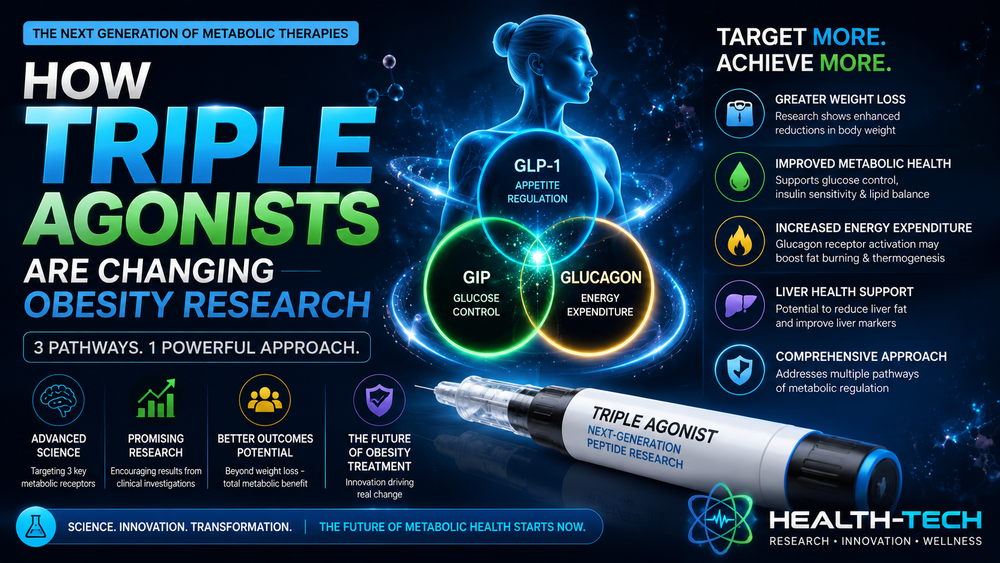
The triple-action metabolism drug is the latest development in the medical field of weight management, which is associated with the use of three metabolic receptors to deliver three key effects, including appetite suppression, insulin regulation, and a higher resting metabolic rate. Such a multi-receptor agonist makes it possible to ensure the regulation of glucose balance and lipid metabolism by biological means.
As it is indicated by research in NEJM, the multi-receptor agonist known as Retatrutide provided a mean body weight loss of up to 24.2% in 48 weeks at the prescribed clinical dosage.
It is an unprecedented innovation in terms of structure for retaining weight loss and metabolic health.
Traditional single-mechanism treatments work exclusively on the appetite suppression side, while a triple-action science targets energy in a completely different way at the cellular level. This dual action of stimulating the GLP-1 receptor, GIP receptor, and inhibiting glucagon works to keep the body in a state of active rest, which is the issue that has always hindered weight loss.
TRIPLE-ACTION METABOLIC SIMULATION
[ GLP-1 ] —> Satiety & Slowed Gastric Emptying
[ GIP ] —> Enhanced Postprandial Insulin Response & Lipids
[ Glucagon] -> Increased Basal Metabolic Rate & Liver Fat Burn
RESULT: Synergistic 3-Way Activation for Sustainable Weight Loss
How Triple Activation Works
Multi-receptor mechanism focuses on activating three separate biological receptors at once:
- GLP-1 Receptor Agonism: This mechanism leads to delayed gastric emptying and sends direct satiety messages to the brain’s hypothalamus, thus lowering the number of calories taken in per day, without experiencing hunger pangs.
- GIP Receptor Agonism: Assists in the production of insulin, which is glucose-dependent, and improves lipid metabolism.
- Action of Glucagon Receptors: This helps in the thermogenesis and lipolysis of the liver to ensure that the resting metabolic rate is maintained when losing weight.
| Receptor Target | Primary Biological Action | Metabolic Advantage Provided |
| GLP-1 | Gastric and hunger regulation | Fewer calories consumed & reduced cravings |
| GIP | Insulin sensitization & lipid metabolism | Optimal control of blood sugar levels & lipid metabolism |
| Glucagon | Thermogenesis & lipid metabolism in the liver | Maintenance of increased caloric burn during weight loss |
The effect of all three mechanisms is cumulative because, as is shown in the Lancet Phase 2 Clinical Trials, the combination proves more effective than the use of one or two agonists.
Transforming Metabolic Rate Safely
The distinguishing feature of triple-action science is the presence of glucagon activity. The traditional weight loss program presumes to create a calorie deficit, which stimulates an evolutionary conservation response, reducing resting metabolic rate (RMR) and resulting in weight loss plateaus.
Glucagon receptor activation stimulates the opposite response, which is the conservation response, by stimulating the liver to burn more energy directly. This active hepatic thermogenesis is a new method for burning fat continuously while preserving lean muscle mass and maintaining normal resting metabolic rates, according to American Diabetes Association Scientific Sessions research.
In addition, the trial data showed that up to 90% of participants with elevated liver fat had liver lipid normalization.
Comparing Advanced Metabolic Therapies
Once you understand the differences between the three actions and the existing ones in the market, then you will understand why there are very rapid advancements in the field of clinical wellness in contemporary society:
| Feature / Metric | Single-Agonist (GLP-1) | Dual-Agonist (GLP-1/GIP) | Triple-Agonist (Retatrutide) |
| Receptors Targeted | 1 (GLP-1) | 2 (GLP-1, GIP) | 3 (GLP-1, GIP, Glucagon) |
| Average 48-Week Weight Reduction | ~15% | ~20.9% | Up to 24.2% |
| Resting Metabolic Rate Impact | Standard adaptive suppression | Moderate preservation | Active Thermogenic Support |
| Fat Reduction Rate in the Liver | 50 percent | 80 percent | Up to 90 percent normalization |
Protocol Phasing and Progression
According to research findings, structuring a titration schedule helps in ensuring maximum tolerance levels and a steady pace of progress towards weight loss targets.
- Phase 1: Introduction (weeks 1-4) – A small dose will give an opportunity for the development of sensitivity of the receptors and reduction of gastrointestinal adaptation to the lowest level possible.
- Gradual Increases in Doses (weeks 5-16): Gradual increments of the dose in 4-week intervals (maximum 4mg and 8mg) activate more receptors.
- Maintenance (Weeks 17+): Complete activation of multiple receptors through target doses of 12 mg creates a consistent weight loss effect along with total metabolic reprogramming.
Based on studies referenced in ClinicalTrials.gov, a step-by-step process of dose increases ensures that the discontinuation rate is less than 6%.
Future of Living Well
Triple-action therapy introduces a revolutionary way of looking at consumer health and preventive wellness. With hunger regulation, blood glucose regulation, and enhanced energy consumption brought together into one unified solution, Retatrutide becomes the ultimate health and energy optimization tool.