
Two boxes sit on the shelf at the same store, hold the same litter, and serve the same cat. One costs a few dollars and the other costs several times that, which makes the cheaper box look like the obvious choice. The comparison changes once you stop pricing the purchase and start pricing the years. A plastic pan is replaced every season or so, while metal is bought once by most households. Set side by side over a realistic ownership period, the gap narrows, and the quality of daily life around the box widens.
This comparison looks at how each material behaves under real conditions: scooping, washing, scratching, and time. It also covers the costs that never appear on a price tag, from odor control to the litter you lose to cracks and leaks. If you are deciding whether to upgrade, the honest answer depends on how long you expect to keep the box and how much the smell matters to you.
A Side-by-Side Look at How Each Material Ages
New plastic performs well. The surface is smooth, the box is light, and cleanup is quick. The problems start at the microscopic level and compound. Every scoop drags grit across the bottom, and every set of claws digs into soft polymer. Those marks are small enough to ignore individually and large enough, collectively, to hold moisture and odor. Within months, a plastic box that looks fine in daylight smells different when the room warms up.
Stainless steel does not take those marks. The surface is hard enough that a scoop rides over it, and claws leave no meaningful texture. Cleaning removes what is on the surface because there is nowhere for it to hide. After a year of use, a steel pan still looks and smells like a steel pan, which is the whole argument in a single observation. A stainless steel cat litter box is not indestructible, but the wear it does accumulate is cosmetic, not functional.
Scooping, Washing, and the Weekly Routine
The daily difference is subtle and the weekly difference is not. Scraping a plastic bottom raises a fine dust of litter and trapped residue; scraping steel lifts waste cleanly. When it is time for a full wash, plastic needs a scrub brush pushed into scratches, while steel responds to a sponge and a rinse. Neither is difficult, but the plastic version takes longer and never quite feels done. Owners who clean less often because the job is tedious end up with the smell problem they were trying to prevent.
Weight, Stability, and the Floor
Plastic wins on portability and loses on stability. A light pan slides when a cat launches out of it, and a slippery floor makes it worse. Steel is heavier, which keeps the box planted and the litter inside during enthusiastic digging. That weight becomes a minor annoyance only if you carry the box to a tub or sink for washing. A removable liner or a mat under the box solves most of the sliding problem, so treat stability as a real advantage rather than a trade-off.
The Costs That Never Appear on the Price Tag
The sticker price is the smallest part of the equation. Plastic boxes are replaced repeatedly, and each replacement means a new purchase, a fresh adjustment period for the cat, and another plastic object in the waste stream. Add the extra litter lost to cracks and the cleaning products spent chasing odor, and the cheap box stops being cheap.
There is also an invisible cost in stress. A box that smells faintly of ammonia, no matter how often it is cleaned, is a box a cat may start avoiding. Feline elimination problems outside the box are difficult to fix once they become habit, and they often trace back to a dirty or unpleasant box rather than a behavioral flaw. Paying more for a surface that stays neutral is a small price against that risk.
Where Plastic Still Makes Sense
Plastic is not a bad option in every situation. It is lighter for travel, inexpensive for a temporary foster setup, and easy to replace if a cat has a medical issue that ruins the box. For a kitten that will outgrow its first pan or an apartment where the box must be carried daily, plastic has real advantages. The honest recommendation is to match the material to the use: short-term and portable favors plastic, long-term and stationary favors steel.
Choosing Steel Well
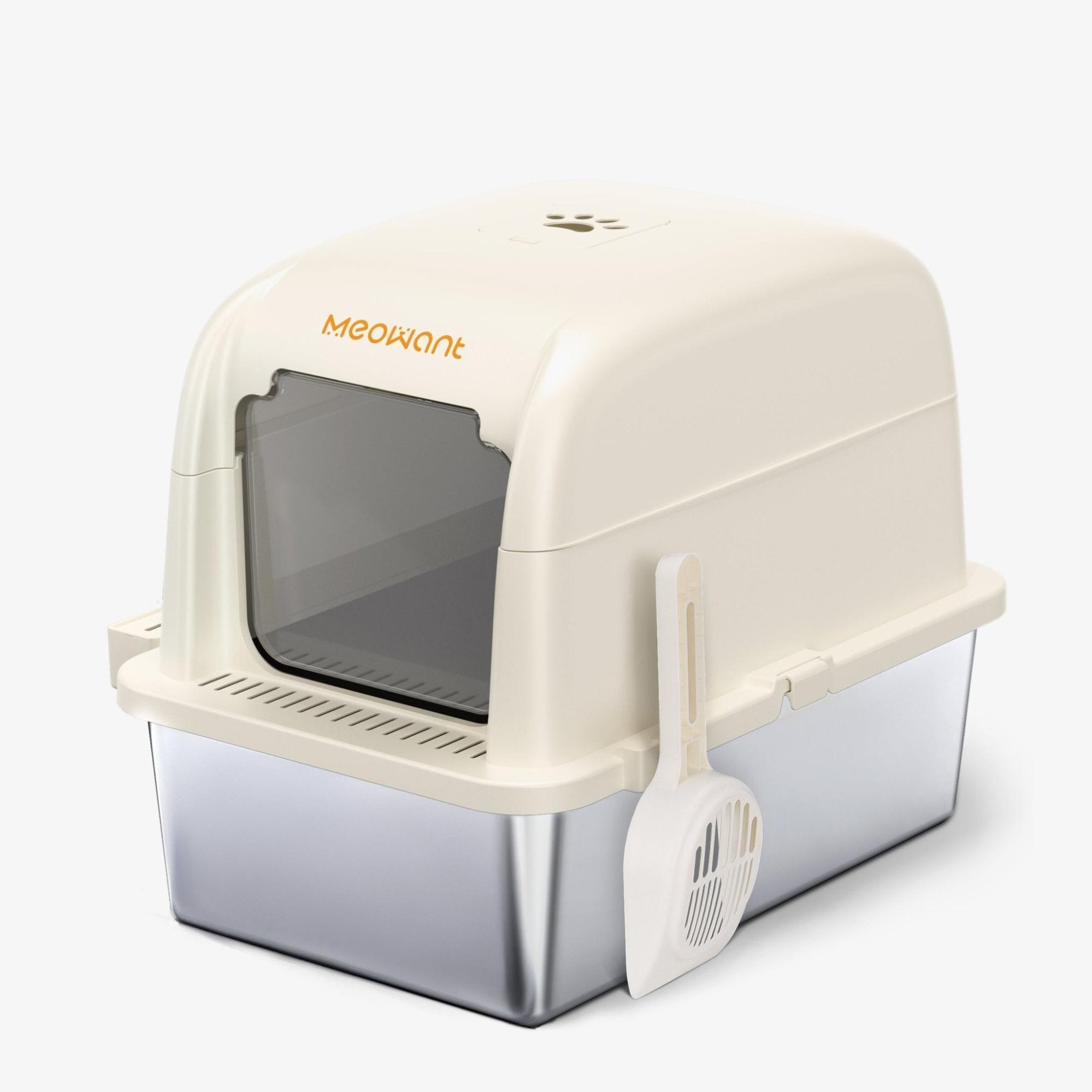
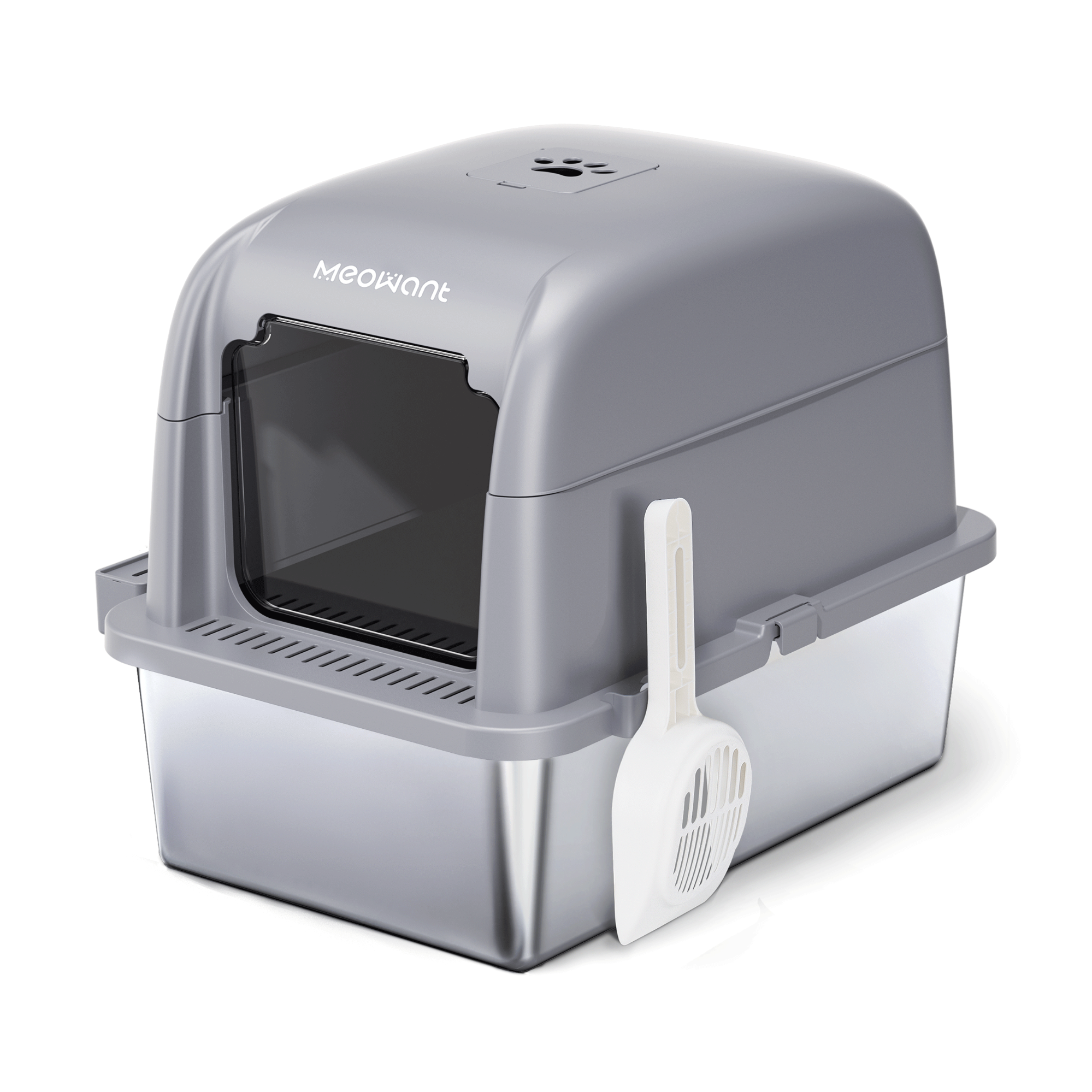
If you go with metal, buy for construction rather than branding. Look for a pan thick enough that it does not flex, edges that are finished smoothly, and a base that sits flat. Check the interior corners, since rounded seams are easier to clean than sharp ones. Depth should match your cat’s digging style; a deep pan contains scatter, and a high back helps with cats that aim upward. Meowant’s steel box is built with a rigid pan and a washable finish, which is the practical version of everything above.
What Owners Notice After the First Month
Ask anyone who has made the switch and the reports follow a pattern. The first week is unremarkable, because both boxes are clean. The difference appears around week three, when a plastic pan starts to hold a faint smell and the steel one does not. By month two, plastic owners are scrubbing scratches they cannot reach, and steel owners are rinsing a surface that still looks new. Those are small moments individually, and together they explain why the same people rarely go back.
The one complaint steel owners share is weight during deep cleans. Carrying a full metal box to a shower or utility sink takes more effort than lifting plastic, and some owners solve it by placing the box where it can be washed in place. Others use a scoop-and-wipe routine that avoids lifting the pan entirely. Once that adjustment is made, the objection fades. It is worth deciding in advance where the box will be cleaned so the weight does not turn into a daily irritation.
Making Either Box Last Longer
Material sets the ceiling, but habits decide where you land under it. Scoop twice a day rather than once, and the box stays pleasant regardless of what it is made of. Wash with mild soap and warm water instead of harsh chemicals, which can etch surfaces and leave scents cats dislike. Skip liners if your cat shreds them, since torn plastic traps odor underneath. Keep the box out of direct heat, which accelerates both plastic degradation and odor release.
Replace litter fully rather than topping it off indefinitely. Old litter holds dust and odor even in a clean box, and a monthly reset makes the material’s advantages visible. For steel, dry the pan after washing to prevent water spots and keep the surface looking new. For plastic, retire the box at the first sign of deep scratches rather than waiting for a crack. Small routines stretch the life of either option and make the comparison less about price and more about experience.
The Hygiene Angle Nobody Mentions
Odor is the complaint owners notice, but the microscopic story is why it matters. Scratched plastic provides a foothold for bacteria that survive ordinary cleaning, and the surface never truly returns to neutral. Steel offers no such foothold, and a non-porous surface can be sanitized with a wipe that actually reaches the waste. That does not make plastic dangerous, but it does mean steel keeps a box hygienically cleaner with less effort, which is a meaningful edge in homes with multiple cats or immunocompromised people.
The same reasoning applies to litter dust. A rough surface traps fine particles that shake loose when a cat digs, adding to the dust in the air around the box. A smooth pan releases litter cleanly and reduces the cloud that forms after a visit. None of these effects are dramatic on their own. Together they explain why households that switch report a room that simply feels fresher, without any change to how often they clean.
Paying Once or Paying Repeatedly
Plastic is the lower-cost choice today and the higher-cost choice over time. Steel asks for more money up front and then mostly stays out of the way: no scratches to scrub, no odor to chase, no replacement next season. Which one is right depends on how long you plan to keep the box and how much the smell of a used box bothers you.
If the box will sit in one place for years, the comparison favors metal clearly. Buy a solid one, clean it simply, and the purchase quietly pays for itself in litter, cleaners, and peace of mind.
