
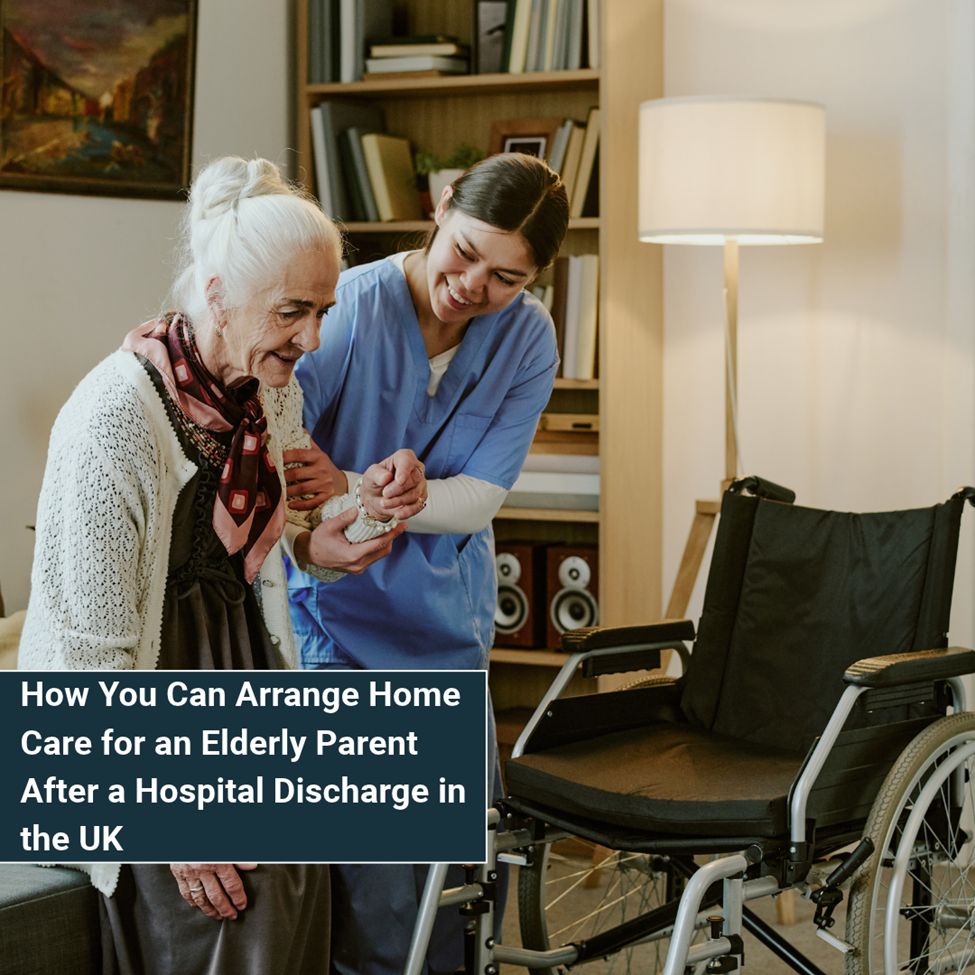
The nurse tells you your mum is well enough to go home. You smile, say thank you, and head for the car park. Then it hits you. You have no idea what happens next.
Many families feel exactly this. In hospital, there were nurses, call bells and people who knew what to do. At home, it’s down to you. Can she manage the stairs? Who’ll help her wash and dress? Who’ll make sure she takes her tablets on the days you’re at work?
The good news is that you don’t have to solve everything at once. Knowing how to arrange home care after hospital discharge starts with a few simple conversations and a clear picture of what your parent needs. This guide covers who to talk to, what to ask, how to compare your options and how to choose care you can trust.
How Do You Arrange Home Care After Hospital Discharge in the UK?
Ask the ward’s discharge team what support your parent needs. Request a care needs assessment from the local council. Then decide whether short-term NHS or council support, privately arranged care, or a mix of both fits best. Start before discharge day, not on it.
The process usually follows these steps:
- Speak to the discharge team. Ask for a named contact and the planned date. Find out what’s already been arranged and what hasn’t.
- Ask about reablement. This short-term support helps people rebuild everyday skills after illness. In England it’s usually free for up to six weeks, but eligibility and availability vary.
- Request a care needs assessment. In England, anyone can ask their council for one under the Care Act 2014, whatever their savings. The financial assessment comes later.
- Collect the paperwork. You want the discharge summary, medication list, follow-up appointments and details of any equipment.
- Plan the first few days. Even if professional care is booked, line up a family rota for the first 48 hours.
Many hospitals now use a “home first” approach, where fuller assessment happens once someone is back in familiar surroundings. That can work well. It also means gaps can appear, so ask directly: “What will be in place on the day she gets home?”
Scotland, Wales and Northern Ireland have their own assessment processes and charging rules. Scotland, for example, provides free personal care for adults who are assessed as needing it. Your local council or health and social care trust can explain what applies to you.
What Does Your Parent Actually Need Help With?
Before you compare services, get specific. “She needs a bit of help” is hard to arrange. A list is easy to act on.
Sit down with your parent, if they’re up to it, and note what they can do alone, what they can do with help and what they can’t do yet:
- Washing, dressing and using the toilet
- Making meals and drinking enough
- Taking medication at the right times
- Getting in and out of bed or a chair
- Moving around the house, including stairs
- Shopping, housework and getting to appointments
- Company and conversation
That last item matters more than people expect. Loneliness slows recovery and dents confidence.
If you’re considering professional help, signs to watch for include struggling with personal care, missed medication, repeated falls or a fading appetite. Needing help isn’t a failure on anyone’s part. It’s often what lets a parent stay at home safely.
For families in the county, a good provider of home care Kent residents can rely on will start with a conversation about routines and preferences before suggesting a care plan. If anyone offers a fixed package without asking about your parent first, be cautious.
Visiting Care or Live-in Care: Which Suits Your Family?
These are the two main types of private home care. Neither is better. They simply suit different situations.
Visiting care (often called domiciliary care) means a carer calls at agreed times. Visits might last 30 minutes to an hour or longer. They typically cover washing, dressing, meals, medication prompts and mobility support. It suits someone who is fairly independent between visits. If you’re searching for domiciliary care Kent providers offer, ask how flexible visit times are, since a morning routine rarely fits a rigid slot.
Live-in care means a carer stays in your parent’s home, usually with agreed breaks and rest periods. It can help when someone needs support through the day, reassurance at night or company throughout. Live in care Kent families explore is often chosen when frequent visits would otherwise be needed. It isn’t automatically right for everyone. It needs a spare room, and your parent has to be comfortable with someone else in the house.
| Option | May Suit Someone Who |
| Family support | Needs occasional help with everyday tasks |
| Reablement | Needs short-term help to rebuild skills and confidence, where available |
| Visiting care | Needs help at particular times of day |
| Live-in care | Needs regular support and reassurance throughout the day |
Needs change, too. Many families start with visits and move to something more intensive later. Choose a provider who’ll adjust the plan without a fight.
What if Your Parent Has Parkinson’s or Dementia?
A diagnosis doesn’t decide the level of care. Two people with the same condition can need very different support. What matters is how the condition affects your parent day to day.
- Parkinson’s disease can affect movement, balance, speech and energy, and symptoms may change through the day. The timing of medication often matters a great deal. Good Parkinson care at home usually means carers who understand why a delayed dose can make mobility harder. It also means support with safe movement, and a willingness to work alongside the GP, specialist nurse or physiotherapist. Ask any provider what Parkinson’s-specific training their carers have.
- Dementia brings different challenges. Memory, confusion, mood and communication may all be affected. Familiar surroundings and predictable routines often help people feel more settled, though a hospital stay can leave someone more disoriented than before. When you’re looking at Alzheimers homecare services, ask about dementia experience, how carers respond to distress, and how changes in behaviour or health will be reported to you. Consistency matters here. Seeing the same few faces helps.
For both conditions, ask providers how they work with healthcare professionals, and whether the care plan reflects any recent assessments.
Getting the Home Ready, and Surviving the First Few Weeks
The first fortnight sets the tone. A little preparation goes a long way.
Before discharge day:
- Clear walkways. Move loose rugs, trailing cables and clutter.
- Check the lighting on the stairs, landing and bathroom.
- Stock the fridge with easy meals and keep drinks within reach.
- Ask the discharge team or an occupational therapist about equipment such as grab rails, a raised toilet seat or a walking aid.
- Set up a bed or chair downstairs if stairs are a worry.
Once your parent is home:
- Build a simple routine for meals, medication, washing and rest.
- Keep discharge papers, medication lists and key phone numbers in one folder.
- Attend follow-up appointments and write down questions beforehand.
- Agree who does what, so nothing falls between family members.
Pace matters too. Your parent may tire quickly, and that’s normal after a hospital stay in the UK. A well-planned recovery routine helps them rebuild strength without overdoing it.
When to get help fast in the UK: Sudden confusion, serious breathing difficulties, chest pain or a bad fall need urgent medical attention. Call 999 or NHS 111 as appropriate. Don’t wait to adjust the care plan.
Who Pays for Home Care in the UK?
This is the question families worry about, so let’s be straightforward. Not all home care is free, and there’s no single UK-wide price. Costs depend on:
- How many visits are needed, and how long each lasts
- The type of support required
- Whether care is needed in the evenings, at weekends or overnight
- Whether you choose visiting or live-in care
- The provider’s rates and any extra charges
What Help Might Exist (England)
- Reablement, or intermediate care, is usually free for a limited period, if eligible.
- Council-funded care depends on a needs assessment and then a financial assessment, which considers income and savings.
- NHS Continuing Healthcare can pay for care when someone has a “primary health need”. Eligibility is assessed against national criteria, and it isn’t common.
- Attendance Allowance is a benefit some people over State Pension age may claim if they need help with personal care. Check GOV.UK for current rules.
Whatever route you take, ask for a written quotation that shows exactly what’s included. Check notice periods, cancellation terms and how bank holidays are charged. Hidden extras are what sour families owe a provider.
In Scotland, Wales and Northern Ireland, charging and funding rules differ. Your local council or trust can explain what applies.
How Do You Choose a Provider You Can Trust in the UK?
Availability and price matter, but they shouldn’t be the only filters. Try this checklist:
- Regulation: In England, providers of personal care must be registered with the Care Quality Commission (CQC). Check their latest inspection report on the CQC website. Scotland, Wales and Northern Ireland have their own regulators.
- Staffing: How are carers recruited, trained and supervised? Will your parent see the same people regularly?
- Flexibility: Can visit times shift around appointments? What happens if a carer is ill?
- Communication: How will you be updated, and who do you call out of hours?
- Reviews: How often is the care plan reviewed, and what triggers an earlier review?
- Dementia and Parkinson’s experience: Ask for specifics, not general reassurance.
Most importantly, involve your parent. Ask what matters to them. Privacy? A morning cup of tea or coffee before anything else? Being called by their first name? Good care supports independence and dignity. It shouldn’t take over what someone can still do safely. If possible, arrange an introductory chat so your parent can meet the person who’ll be helping them.
Conclusion: A Calmer Way Home
Arranging home care after hospital discharge doesn’t have to happen all at once. Cover the essentials first: talk to the discharge team, make sure the home is safe, list daily needs and ask the council for an assessment. Then take the time to compare options.
Remember that the first plan doesn’t have to be the final one. Needs change, and a good arrangement changes with them.
If you’d like to talk through your parent’s situation, speaking to an experienced provider is a sensible next step. A friendly conversation costs nothing. You can find out more about personalised support at My Homecare.