
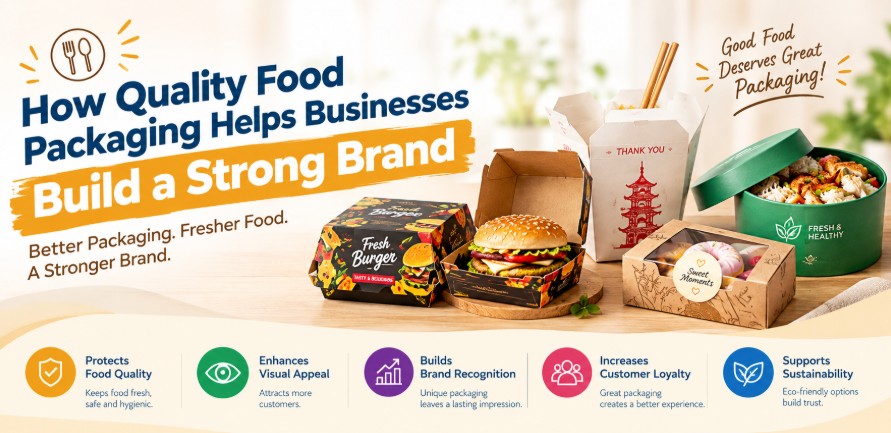
Food businesses need more than delicious recipes to create a positive customer experience. Restaurants, cafes, bakeries, and takeaway services must also consider how their products are packed, transported, and presented. Packaging protects food, supports hygiene, and helps customers recognize a business. Choosing suitable boxes can make a noticeable difference in how customers experience a meal, especially when ordering takeaway or delivery.
Why Food Packaging Matters for Restaurants
Custom food packaging boxes serve several important purposes. It helps protect meals from dust, outside contact, and physical damage while making them easier to handle and transport. A well-designed box can also help maintain the food’s presentation until it reaches the customer.
Different foods require different packaging features. A burger needs a box that supports its shape, while a bakery product may require a design that prevents delicate toppings from being damaged. Selecting packaging according to the product helps businesses deliver a more consistent experience.
Choosing the Right Materials for Food Boxes
The material used in a food box affects its strength, appearance, and practical performance. Businesses should consider the type of food they serve, how long it will remain packaged, and whether it will be delivered hot or cold.
Businesses should also ensure that packaging materials are suitable for their intended food-contact application. Grease resistance, moisture protection, ventilation, and temperature requirements should be considered before placing a bulk order. Not every paper-based box is suitable for every type of food.
Custom Packaging Creates Brand Recognition
Branding is an important part of building a recognizable food business. Customers may remember a restaurant because of its menu, service, and distinctive visual identity. Packaging can reinforce these elements by displaying the business name, logo, colors, and other design features.
Custom-printed boxes provide an opportunity to maintain a consistent appearance across takeaway orders. For example, a cafe can use coordinated packaging for sandwiches, pastries, and snack items. A restaurant can apply similar design elements to its burger boxes, meal boxes, and carryout packaging.
Different Foods Need Different Packaging Solutions
There is no single box design that works equally well for every menu item. Food businesses should select packaging according to portion size, shape, texture, moisture content, and transportation needs.
Burger and Fast-Food Boxes
Burgers, sandwiches, fries, and similar products require packaging that supports their shape and makes serving convenient. A properly sized box can help prevent items from moving excessively during delivery. Ventilation may also be necessary to reduce trapped steam and help preserve texture.
Bakery and Dessert Packaging
Cakes, cookies, pastries, and other baked goods often need packaging that protects delicate surfaces. The box should provide enough room for the product without allowing excessive movement. For decorated cakes, suitable height and structural support are particularly important.
Takeaway Meal Boxes
Restaurants selling complete meals should consider portion sizes, sauce separation, and the possibility of leakage. Packaging must be appropriate for the food’s temperature and moisture level. Foods containing gravy or other liquids may require a separate leak-resistant container rather than a standard paper box.
Snack and Specialty Food Packaging
Snacks and specialty food products can benefit from packaging designed around their individual shapes and quantities. A well-fitted box helps organize the contents and provides a consistent presentation for takeaway, retail, or promotional use.
How Packaging Improves the Customer Experience
Customers evaluate more than the taste of a meal. They also notice whether an order arrives in good condition, whether the packaging is easy to open, and whether the food looks appealing when served.
A box that opens conveniently and keeps its contents organized can make mealtimes easier. Secure closures can help reduce accidental opening during transport, while appropriate sizing can prevent products from shifting inside the package.
Packaging should also be practical to carry and store. Oversized boxes can waste storage space and increase shipping costs, while boxes that are too small may damage the food or make closing difficult.
Cost-Effective Packaging for Growing Businesses
Managing costs is essential for restaurants, food startups, and established brands alike. Packaging prices can vary according to material, dimensions, printing requirements, order quantity, and design complexity.
Buying in larger quantities may reduce the unit price, but businesses should avoid ordering more boxes than they can store or use before their packaging design changes. A practical purchasing plan balances quantity discounts with storage capacity and expected demand.
Businesses should evaluate the total value of packaging rather than looking only at its purchase price. Damaged food, customer complaints, wasted materials, and delivery issues can create additional expenses. Reliable packaging that fits the product properly may help reduce these avoidable problems.
Selecting a Reliable Food Packaging Supplier
A suitable supplier can help businesses identify packaging options that match their products, budget, and branding requirements. Before making a purchase, buyers should review material specifications, available dimensions, printing options, minimum order quantities, and estimated production timelines.
Requesting samples is a useful way to assess quality before committing to a large order. Businesses should check whether the boxes assemble easily, close securely, and perform as expected with their actual food products.
Businesses exploring customized solutions can review the food packaging options available from My Box Printing to understand how box dimensions, presentation, and branding can be considered together when planning packaging for different food products.
Conclusion
Custom packaging boxes are an important part of running a successful restaurant, bakery, cafe, or takeaway business. The right box can protect products during transportation, support an attractive presentation, and help create a consistent brand identity.
By considering material suitability, box dimensions, printing quality, customer convenience, and overall cost, businesses can make better packaging decisions. Testing samples and working with a reliable supplier can further help ensure that packaging meets everyday operational needs.
Whether a business serves fast food, baked goods, snacks, or complete meals, thoughtful packaging choices can contribute to a more professional and dependable customer experience.