
Understanding both teams to score corners cards odds comes down to one idea: each price is a bookmaker’s estimate of how likely a count is, with a margin added on top. What changes from market to market is what gets counted and how much one event drags the others along with it.
This guide shows how to read those prices, using the extra markets an Asian-style sportsbook such as M88 lists as the frame. It does not predict results or promise returns. It explains how to read a number.
What do these markets actually count?
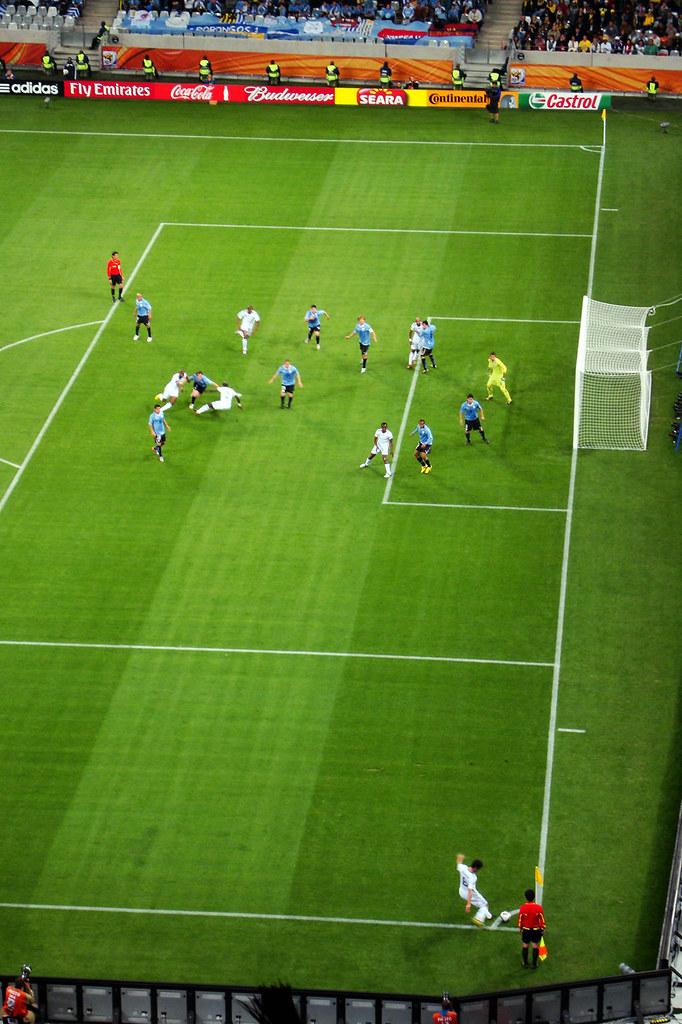
A match result market depends on the score. Corners and cards depend on counts, so they stay live even when the result looks settled. At 3-0, the match-winner price is effectively dead, but a corners line can still move. In the 2024-25 Premier League season there were 3,913 corners and 1,591 cards across 380 matches, according to BettorEdge. That is roughly 10 corners and 4 cards per match.
|
Market |
What is counted |
Worked example |
|
Both teams to score (BTTS) |
Whether each side scores at least once |
A 1-1 draw is a Yes. A 3-0 win is a No. |
|
Total corners |
Both teams’ corners added together, compared with a line (often 8.5 to 12.5) |
6 + 5 = 11, so Over 9.5 wins and Over 10.5 also wins. |
|
Corner handicap |
The corner difference, with Asian-style lines |
A quarter line such as +2.25 splits the stake across two levels, so a half win or half loss is possible. |
|
Booking points |
Yellow card 10, red card 25, a second yellow leading to dismissal 35 |
Over/Under on the combined points of both teams. |
Corner and card markets are generally settled on 90 minutes plus stoppage time, not extra time. Bookmakers differ on this, so treat it as a default to check.
Asian-style sportsbooks often group these under extra or special tabs, next to the main handicap and totals. The M88 football markets are one place to see how an operator of that type presents them, although names and settlement rules differ between sites.
How do you turn a price into a probability?
Divide one by the decimal odds. A 58% chance corresponds to fair odds of 1.72 (1 ÷ 0.58). If the bookmaker actually offers 1.65, the market needs about a 60.6% chance to break even, which is higher than your estimate. The gap is the margin plus the uncertainty in whatever model produced your number.
|
Decimal odds |
Implied probability |
|
1.65 |
60.6% |
|
1.90 |
52.6% |
|
2.00 |
50.0% |
Here is an illustration with numbers I made up, not real M88 prices. Say Over 9.5 corners and Under 9.5 corners are both offered at 1.90. Each implies 52.6%, and together they add up to about 105.3%. Scale both back to 100% and you get a 50/50 split. The extra 5.3 points is the bookmaker’s margin.
Odd/even markets show the same effect. They look like coin flips, but the margin is already inside the price, so they are rarely fair.
How are corner lines priced, and why is the average not enough?
The total is both teams’ corners added together and compared with one line. Because lines end in .5, there is no push. Over 9.5 means 10 or more, and nothing is refunded. Asian corner handicaps work like goal handicaps, and quarter lines give you the half-win or half-loss outcomes shown in the table above.
The league average of about 10 is a starting point, not a forecast. ProTipster points out that two matches in the same league can end with 14 and 6 corners. In my view, a price only makes sense once you know why this match should differ from the average. That could be a side that crosses a lot, or a game likely to be one-sided.
Analysts also disagree. In one illustrative example from GoalIQ, two analysts both expected a corner-heavy match but put Over 9.5 at 56% and 61%. A view only means something when it is tied to a specific line and price.
How do card markets work, and why does the referee matter?
Card markets usually run on booking points rather than raw card counts. A yellow is 10, a red is 25, and a sending-off after two yellows is 35. You then bet Over or Under on the combined total for both teams.
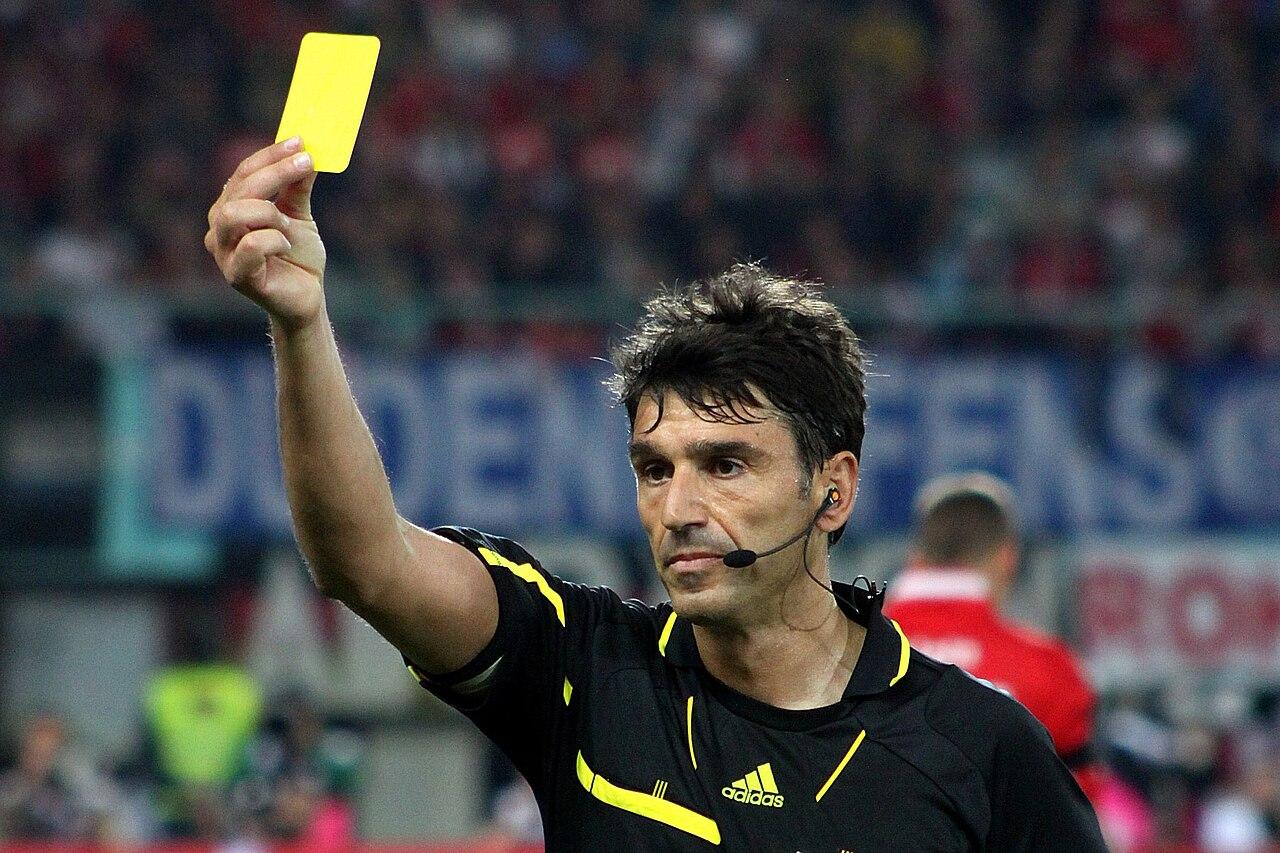
Cards depend on both teams and on the official, and BettorEdge notes that the referee is the part few people price. ProTipster suggests checking a referee’s average over at least 20 recent matches. The suggestion is to compare it with the league norm, usually quoted at 3.5 to 4.5 cards per match, and to weigh team discipline and derby intensity. That is an advisory site’s method, not verified data. The 1,591 cards in 380 Premier League matches works out at about 4.2 per match, which sits inside that range. A 20-match sample is still small, so it should shape your view rather than settle it.
Why is combining BTTS, corners and cards riskier than it looks?
ProTipster gives the example of a combined bet: Over 9.5 corners, Over 3.5 cards and both teams to score. It looks like three separate opinions, but it is really one opinion about a frantic, open match. A hard-fought game can produce goals at both ends, many corners and many bookings together.
That is my inference, not something a source confirms. It means the legs are not independent, so multiplying their prices is not a clean way to estimate the joint chance. Sportsbooks may adjust prices for this on combined bets, and practice varies, so check how your operator handles same-match combinations. Every extra leg also carries its own margin.
What should you check before placing a stake?
Check the rules first. Extra time, how card points are counted and how a market settles can all differ between bookmakers. No source I reviewed sets out M88’s specific rules, so confirm them on the operator’s own rules pages. For orientation, https://m88.inc/ works as an introductory page and entry point to the M88 sportsbook and casino.
Gambling laws and legal ages differ by country, so confirm that betting is permitted where you live and that you meet the age requirement. Set a limit you can afford to lose before you start. Never borrow money to bet.
The corner and card markets are where I would look next. Most guides price each market in isolation, but the more useful habit is to ask what story the match is likely to tell, and which of these counts would move together if that story plays out.