

Buying a new comforter set feels straightforward until you actually try to do it well. Between conflicting advice about fill types, confusing size charts, and product photos that make every option look equally plush, it’s easy to end up with something that looks great online but disappoints once it’s actually on your bed. Most of the dissatisfaction people report after a purchase traces back to a handful of avoidable mistakes rather than bad luck. Skipping measurements, ignoring fill density, or assuming a higher price automatically means better quality all lead to the same outcome: a set that doesn’t match your actual needs. This article walks through the most common missteps in comforter shopping and what to check instead, so you can make a purchase that holds up to real use rather than just first impressions.
Assuming Every Comforter Fits the Same Way
One of the most frequent errors is treating comforter set sizing as identical to mattress sizing without accounting for drop length and overall dimensions. A queen mattress and a queen comforter share a name but not necessarily the same fit, since drop length, meaning how far fabric hangs past the mattress edge, varies significantly between brands. Some sets are designed with a generous drop meant for platform beds without a box spring, while others run shorter and work better with taller frames.
Skipping this detail often results in a comforter that either drags excessively on the floor or leaves an awkward gap along the sides of the bed. Before ordering, measuring your specific mattress height and comparing it against the listed drop length prevents this mismatch entirely, and it takes only a few extra minutes.
Overlooking Fill Type and Construction Quality
Why Stitching Pattern Matters
Many shoppers focus entirely on softness when testing fabric in person or reading descriptions, but stitching pattern affects long-term performance more than initial feel. Baffle box stitching keeps fill evenly distributed, preventing the clumping and cold spots that develop over time with simpler straight-line stitching. This becomes especially noticeable after repeated washing, when poorly constructed sets start to look uneven even if they felt fine when new.
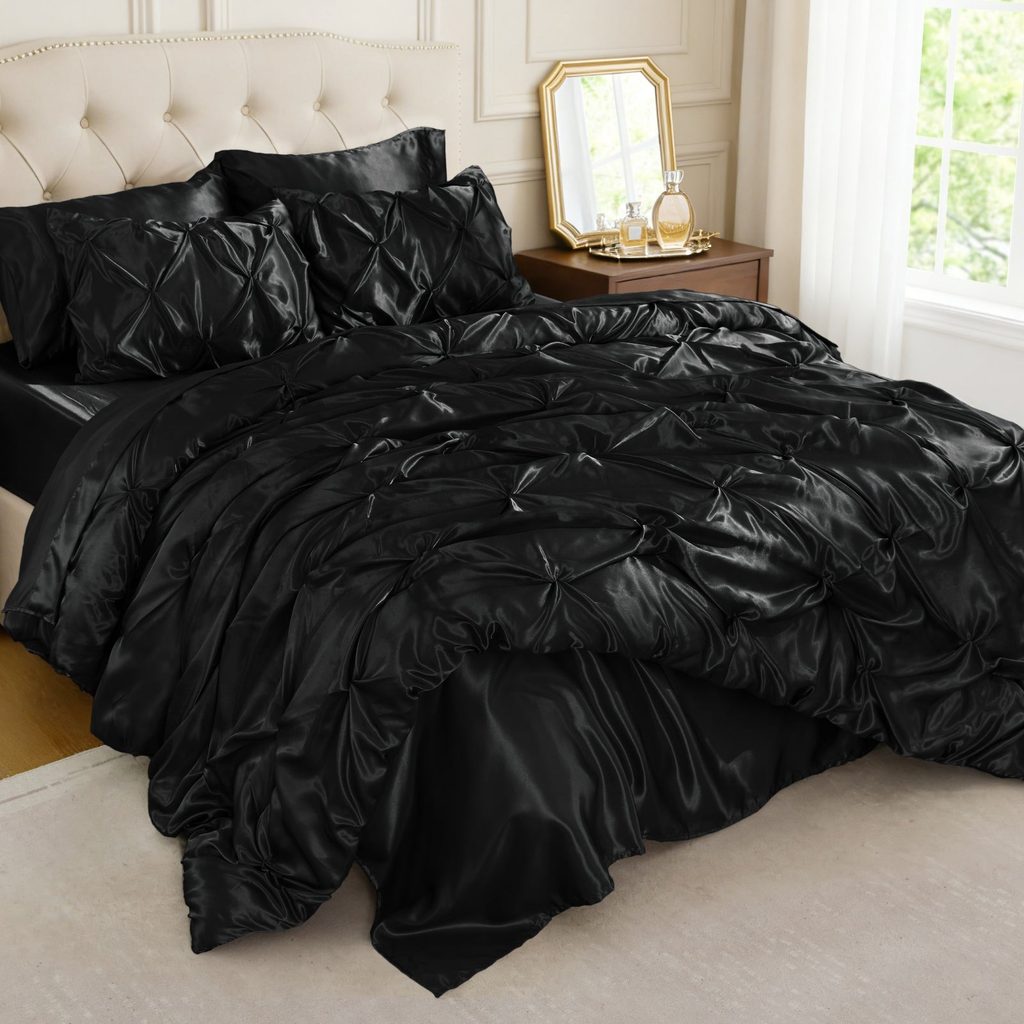
Matching Fill Weight to Your Bedroom
Fill weight should correspond to your bedroom’s typical temperature rather than a general assumption that heavier automatically means better. A heavily filled comforter in a warm bedroom leads to overheating regardless of how nice the fabric feels, while a lightweight option in a cold room won’t provide enough warmth on its own. Checking the season rating, when available, helps set realistic expectations before buying.

Buying Multi-Piece Sets Without Checking Individual Components
Bundled bed-in-a-bag sets are convenient because they coordinate shams, skirts, and decorative pillows without requiring separate purchases, but bundling can also hide quality differences between the main comforter and accessory pieces. It’s worth reviewing individual piece dimensions and fabric details rather than assuming a matching set means uniform quality throughout.
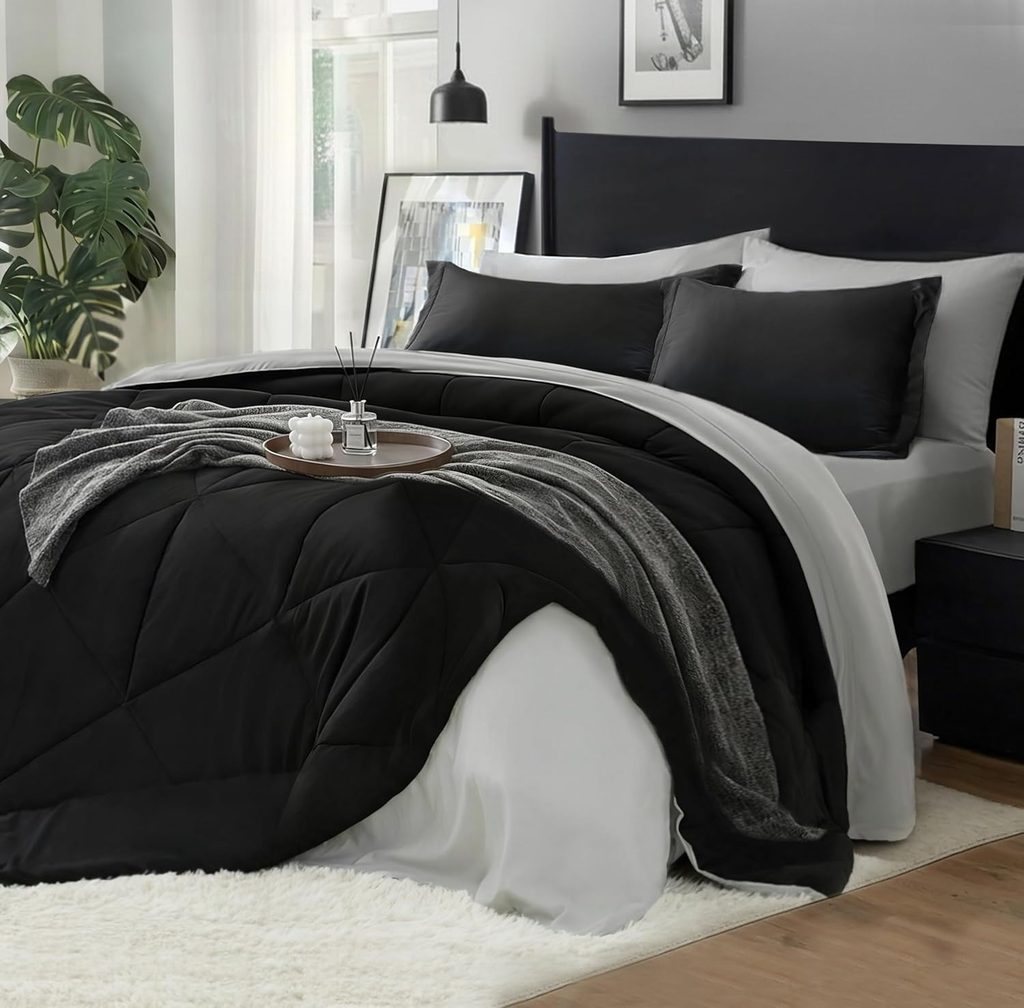
Reputable brands like Bedelite typically list specifications for each piece separately, which makes it easier to verify that every component in a set meets the same standard before you commit to a purchase. Taking a few minutes to read through those details prevents the disappointment of receiving a beautiful comforter paired with thin, poorly made shams.
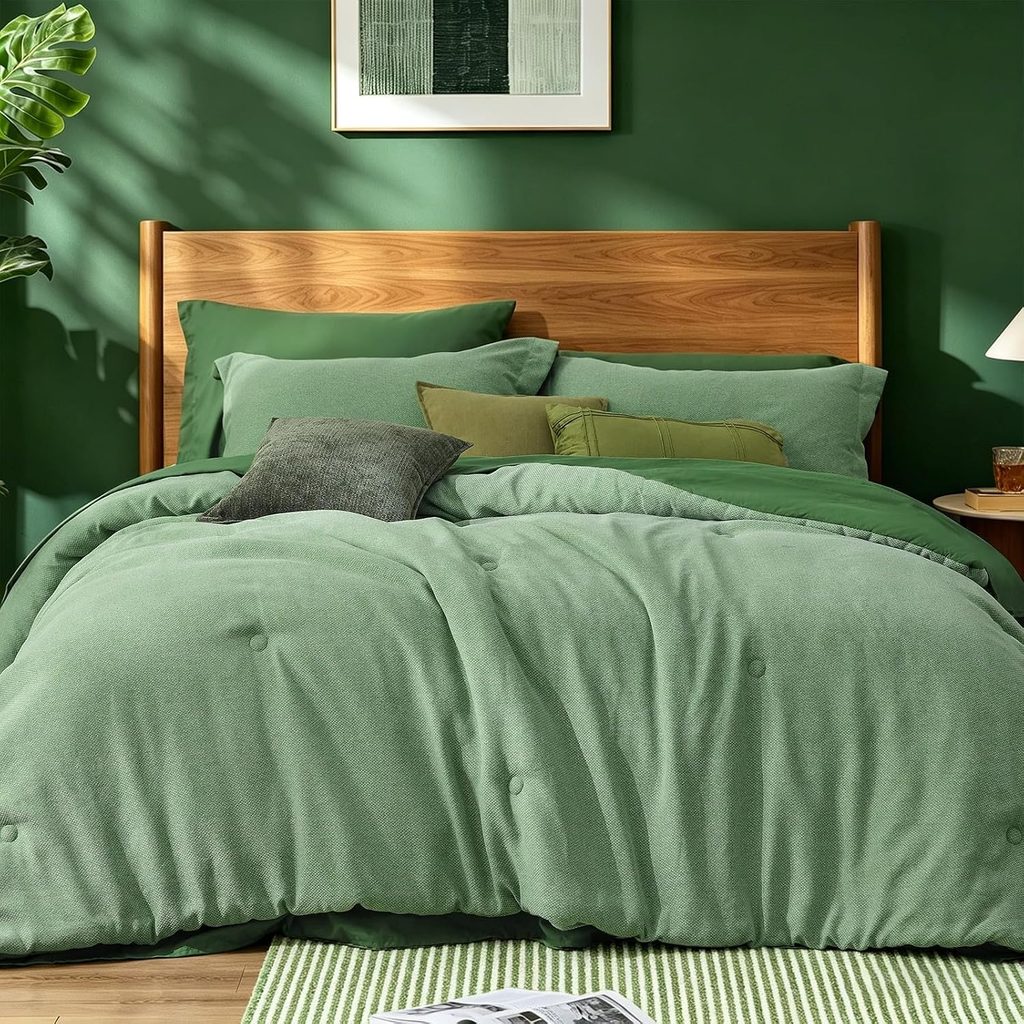
Reading recent customer reviews with photos can also reveal discrepancies between marketing images and the actual product, giving a more realistic sense of texture, color accuracy, and overall build quality before you decide.
Shopping Smarter for Long-Term Comfort
Avoiding these common mistakes comes down to slowing down slightly during the buying process. Measure your bed accurately, pay attention to stitching and fill construction, match warmth level to your actual bedroom conditions, and verify quality across every piece in a bundled set rather than assuming consistency. None of these steps take much extra time, but together they make the difference between a comforter set that disappoints within a season and one that continues to perform well for years. A little diligence upfront saves both money and frustration down the line.