
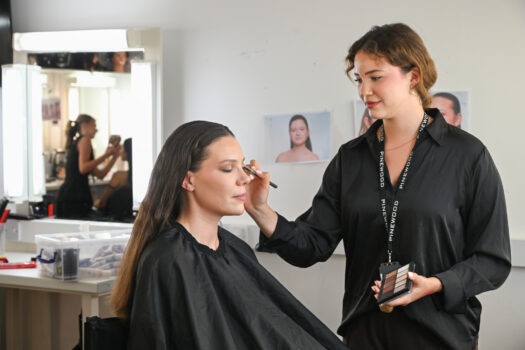
The beauty and entertainment industries require creative professionals who understand both makeup artistry and the demands of production environments. Iver Academy provides practical training for aspiring artists who want to develop professional skills for film, television, fashion, and related creative industries. With Iver Academy, students can explore makeup courses designed around practical learning, creative techniques, and industry-focused development. Iver Academy offers an environment where learners can build confidence, refine their techniques, and understand how professional makeup is applied across different production settings.
What are the benefits of taking professional make up classes?
Professional make up is so much more than just putting on cosmetics. In the film, television, fashion and photo industry, makeup artists must be familiar with various facial shapes, skin types, lighting, products and tools, hygiene and artistic needs.
A proper make up course can help students build these important foundations and provide them with practice in various make-up styles. Depending on their path of training, learners will discover areas of beauty, character development, editorial looks, corrective techniques, hairstyling elements and more.
At Iver Academy, we believe in learning by doing so that pupils can appreciate how makeup looks and applies in a professional creative context.
To create Strong Makeup Foundations
All makeup artists have to have basic skills. Knowing how to prepare skin, incorporate colour, use products for skin tone, blend, contour, highlight and eye makeup sets the stage for the more complex.
These principles can be conveyed to students in structured lessons and exercises in makeup courses. Establishing good habits early will help in experimenting with more complicated looks later on.
Makeup Courses for Film & Television
Makeup for film and television is a challenge because make up needs to be effective in the studio under light, camera, high definition recording and long production timelines. Artists often need to make delicate beauty effects, keep them consistent or alter actors into certain roles.
In Iver Academy pupils have the opportunity to investigate the practical aspects of screen make-up. Pupils could learn about the different ways that a performer’s appearance on camera may be affected by their use of make up.
Understanding Camera Makeup
Makeup that looks excellent in person may appear very different under professional lighting or on camera. Product selection, colour intensity, texture, and blending all require careful consideration.
Professional makeup courses can help aspiring artists understand these differences and practise techniques suitable for screen-based productions.
The exam will feature a character and/or creative makeup component
Artists can be asked to design unique characters for film and television productions. This can include age-appropriate apparel, era-appropriate styles, transformations, period-specific character features or meticulously reproduced looks.
Practice creativity along with technical skills can make these assignments more confident to students.
The following are Makeup Courses for Fashion and Editorial Work
Creating fashion make-up demands creativity, accuracy, and the ability to interpret a creative brief. Makeup artists can collaborate with photographers, models, stylists, designers, creative directors, and production teams.
Fashion shoots can be either neutral, natural and beautiful or dramatic editorial. Make up courses can provide students the opportunity to trial various styles and gain insight into the skills of professional appearance.
At Iver Academy students are given opportunities to learn techniques that can be transferred to creative and fashion environments.
Editorial Makeup Techniques
Artists are frequently inspired to break the mould when making up an editorial. A shoot could include strong colour combinations, graphic details, unusual textures and creative concepts.
Students will be given opportunities to practice and gain experience in new concepts and techniques while learning to perform looks effectively and accurately.
Acquiring Practical Makeup Skills
One key aspect of being a successful and confident makeup artist is getting hands-on experience. Knowledge of techniques can be gained from reading about them, but repeated use of techniques, the development of control and consistency.
Theory and practical based makeup courses can enable students to learn how to apply makeup products, work around brushes, blend, maintain cleanliness, prepare and work professionally. Iver Academy focuses on practical learning that can develop students’ technical skills.
Product Knowledge
A makeup artist can use a variety of foundations, concealers, powders, primers, pigments, creams, setting products, brushes and sponges as well as various specialty tools.
The knowledge of product characteristics can assist the artist to choose the suitable product for the client’s and artistic needs.
Artists can also benefit from the knowledge of products, which enables them to work more efficiently and adjust their work when a specific product is not available.
Observe good hygiene and act in accordance with professional standards
In the professional realm of make up artistry, it is essential that every aspect of hygiene is adhered to. Clean tools and safe working practices are of critical importance to artists, who are working directly with clients and performers, and the skill of making clean tools and appropriate product handling.
Professional Make Up Courses offer students a chance to become familiar with hygiene procedures, brush cleaning, product sanitation and proper workstation management.
Iver Academy enables pupils to identify that professionalism is as significant as creativity when interacting with clients and production teams.
Making a professional kit
One of the things a make up artist can’t do without in her working set up is the makeup artist’s kit. But to make a pro kit it doesn’t have to be every product that is available.
Pupils have the opportunity to learn about how to arrange key products and tools for the kind of activities they want to use them for. An organised kit can help you work efficiently during hectic jobs.
Hair and Make-up Together
For many creative productions, it’s important to have someone who knows how to do makeup and some basic hairstyling. Artists can use complementary skills to more successfully tackle a broader variety of creative briefs.
Learners have the opportunity to study styling techniques which complement make up to produce finished looks, depending on the pathway taken.
Iver Academy promotes creativity by developing awareness in students about the collaboration of various beauty disciplines in the fields of film, television, fashion and photography.
The program begins with training and then moves on to a creative career
Makeup courses can be essential for anyone who wishes to pursue careers in the fields of beauty and entertainment. But it’s also crucial to keep practicing and building a portfolio.
Pupils can be helped to use good quality photographs to record their work and to develop a portfolio which shows the various techniques and styles they have used.
Building a Portfolio
A solid portfolio can demonstrate to potential clients, photographers, production teams or potential employers what an artist can make. Adding some variety to assignments can show versatility and consistent professional presentation of documents.
Learners may also want to incorporate clean beauty photos, editorial photos, creative ideas, character makeup, etc. and any other appropriate projects.
Why Iver Academy Can Support Aspiring Artists
The right educational setting can make a world of difference to the learning. Iver Academy provides training for people who are fascinated by creating make-up creatively for professional use.
Make-up classes offer students a chance to work on the technical aspects, creative aspects, professional standards and practical application. Learners are able to express themselves creatively at Iver Academy, while developing skills pertinent to today’s production practice.
If you are a student who wants to explore different avenues into the film, tv, fashion, or creative film and tv industries, you may want to learn some general skills in make up.
Frequently Asked Questions
1. What can I learn through makeup courses?
Makeup courses can cover areas such as complexion preparation, colour theory, eye makeup, contouring, editorial styles, camera makeup, character looks, product knowledge, hygiene, and professional application techniques.
2. Are makeup courses suitable for beginners?
Many makeup courses are designed to help learners develop skills from the fundamentals upward. Beginners can build their knowledge through structured lessons and practical training before progressing to more advanced techniques.
3. Can makeup training prepare me for film and television?
Professional training can introduce students to techniques and considerations relevant to screen work, including camera makeup, lighting, continuity, character development, and professional hygiene.
4. Can I use makeup skills in the fashion industry?
Yes. Fashion and editorial work can require a wide range of makeup styles. Training can help students develop the creativity, precision, and adaptability needed to interpret different fashion and photography briefs.
5. Why choose Iver Academy for makeup training?
Iver Academy provides practical, creative-focused education for people interested in developing professional makeup skills. Its makeup courses can help learners build technical foundations while exploring applications across film, television, fashion, and related creative industries.