Few pieces of furniture carry as much expectation as a leather couch. It is supposed to anchor the living room, survive years of movie nights, look better as it ages, and somehow suit everyone from a toddler with a juice cup to a grandparent who prefers a firm seat. That is a lot to ask of a single purchase, which is why so many shoppers stall at the decision. The reassuring news is that leather is one of the few upholstery materials that genuinely improves with use, provided you understand what you are buying. This guide covers the practical side of choosing one: how grades of hide behave, how the surface softens over time, which configurations suit busy households, and the small maintenance habits that keep a sofa looking cared for rather than worn out.
What Makes a Leather Couch Worth the Investment
Leather earns its reputation through a simple trade-off: it asks for a larger upfront commitment and returns it in years of service. Unlike fabric, which can pill, stain, or sag, a well-made hide keeps its structure and develops a soft sheen that no synthetic coating can imitate. The material also breathes, warming quickly to body heat in winter and staying cooler than vinyl in summer. What matters most is the grade, because the word “leather” on a tag covers everything from premium full-grain hides to bonded scraps pressed together with adhesive. The difference shows up in how the surface ages, how it feels against bare skin, and how much attention it demands. A leather couch made from a quality hide will show creases where people sit, and those creases are the point: they map the life of the room.
Full-Grain and Top-Grain in Daily Use
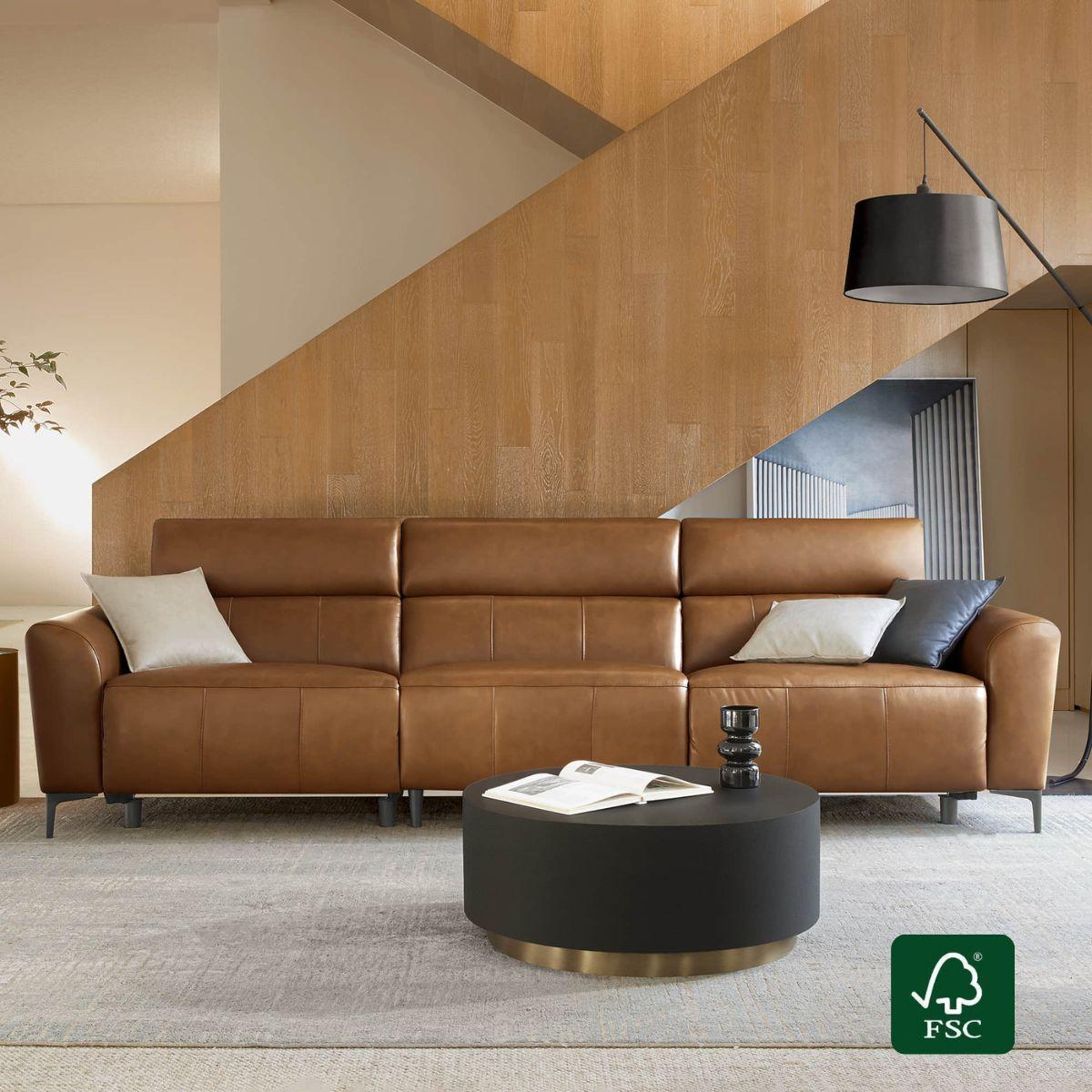
Full-grain leather keeps the entire outer surface of the hide, including the tight grain that resists wear. It is the least processed option, which is why it develops a patina instead of wearing through, and why it costs more. Top-grain leather has the surface lightly sanded to remove imperfections, then finished for a more uniform look. It is still durable and often easier to clean, making it a sensible middle ground for family rooms. Below those tiers sit corrected-grain and bonded leather, which can look convincing in a showroom but tend to peel or crack once the finish breaks down. If longevity is the goal, ask what the surface is made of rather than how it is described. A salesperson who can explain the tannage and finish is a better guide than a tag that simply promises “genuine leather.”
The Comfort Curve: How Leather Softens
New leather feels firmer than most people expect. That firmness is not a flaw; it is the material waiting to be broken in. Over the first few months, body heat and repeated use relax the fibers, and the seat develops a gentle cradle that fabric rarely matches. Cushion fill matters just as much as the cover. High-resilience foam holds its shape, while a fiber or feather wrap adds the sink-in softness many shoppers associate with a worn-in sofa. Judge comfort after a proper sit of several minutes, not a quick bounce, and give the piece a season before deciding it is too stiff. If a floor model feels wonderful, ask how long it has been on the showroom floor; you are feeling months of other people’s visits.
Matching a Leather Couch to Your Household
The right sofa for a quiet study is rarely the right sofa for a house with a dog, two children, and a rotating cast of visiting cousins. Matching the material and layout to how the room is actually used prevents the most common regrets.
Homes With Kids and Pets
Finished, top-grain leather is a practical ally in busy homes. Spills bead on the surface long enough to blot, muddy paw prints wipe away with a damp cloth, and crumbs do not disappear into a weave. Aniline and other unfinished leathers are beautiful but thirsty, so they stain more readily and belong in low-traffic rooms. Look for tightly tailored seams and low, rounded arms that are easy to vacuum. Brands such as CHITA LIVING build family-oriented pieces with this kind of daily handling in mind, pairing wipeable covers with supportive cushions. A washable throw over the seat cushion adds another layer of defense without hiding the material, and it can be removed the moment guests arrive.
Small Apartments and Open-Plan Rooms
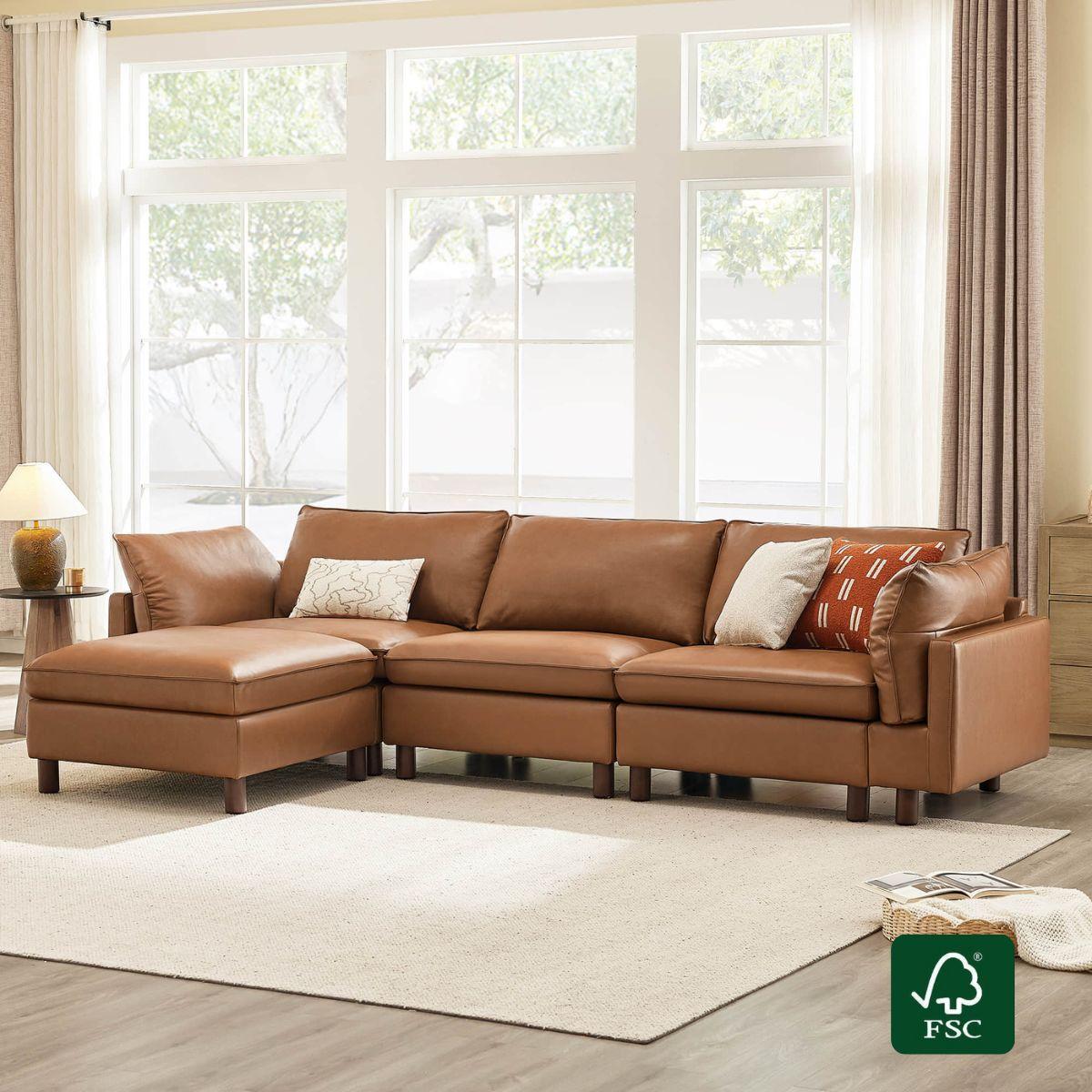
Leather can look heavy in a compact space, but the effect depends on the frame. Low arms, a tight back, and slim legs keep the silhouette light and let the floor show through. In an open-plan room, remember that the back of the sofa is part of the view from the kitchen; a finished back panel is worth checking before delivery. Lighter tones such as sand, camel, or warm gray make a small room feel airier than a wall of black. Measure the walking path, not just the wall, because a sofa that fits but blocks the route to the balcony will be resented every day. A low-profile chaise or a pair of matching loveseats can sometimes serve a narrow room better than one long block of seating.
Color, Finish, and Room Harmony
Leather is a strong visual element, so its color sets the temperature of the whole room. Cognac and tan bring warmth and hide everyday marks better than pale creams. Deep brown reads traditional and pairs naturally with wood and brass. Black is graphic and forgiving, though it can dominate a small space unless the walls and rug stay light. Gray sits between eras and works with almost any accent color. Finish matters as much as hue: a matte surface feels casual and softens scratches visually, while a slight sheen looks more formal and reflects light from windows.
Always view a swatch in the room at different times of day, because showroom lighting flatters every shade. If the sofa will sit near a window, ask how the dye responds to sunlight, since some tones shift more than others. Consider the floor as well: a warm hide against cool gray flooring can look mismatched, while the same sofa on oak or walnut feels intentional. Rugs and throws are easier to change than upholstery, so let the leather be the decision you are most confident about and build the softer layers around it.
Care That Keeps Leather Looking New
Leather is low maintenance, not no maintenance. A few minutes each week prevents the dull, dry look that makes people assume the material has failed. Dust lifts with a soft, dry cloth before it works into creases. Spills should be blotted, never rubbed, and cleaned with a product made for the specific finish. Once or twice a year, a light conditioning treatment restores moisture without leaving a greasy film. Keep the sofa out of direct sun and away from radiators, both of which dry the hide faster than normal use. A simple routine covers most of it:
- Dust weekly with a dry microfiber cloth.
- Blot spills immediately and let the area air dry.
- Condition lightly twice a year, testing on a hidden panel first.
- Keep sharp objects and direct heat away from the surface.
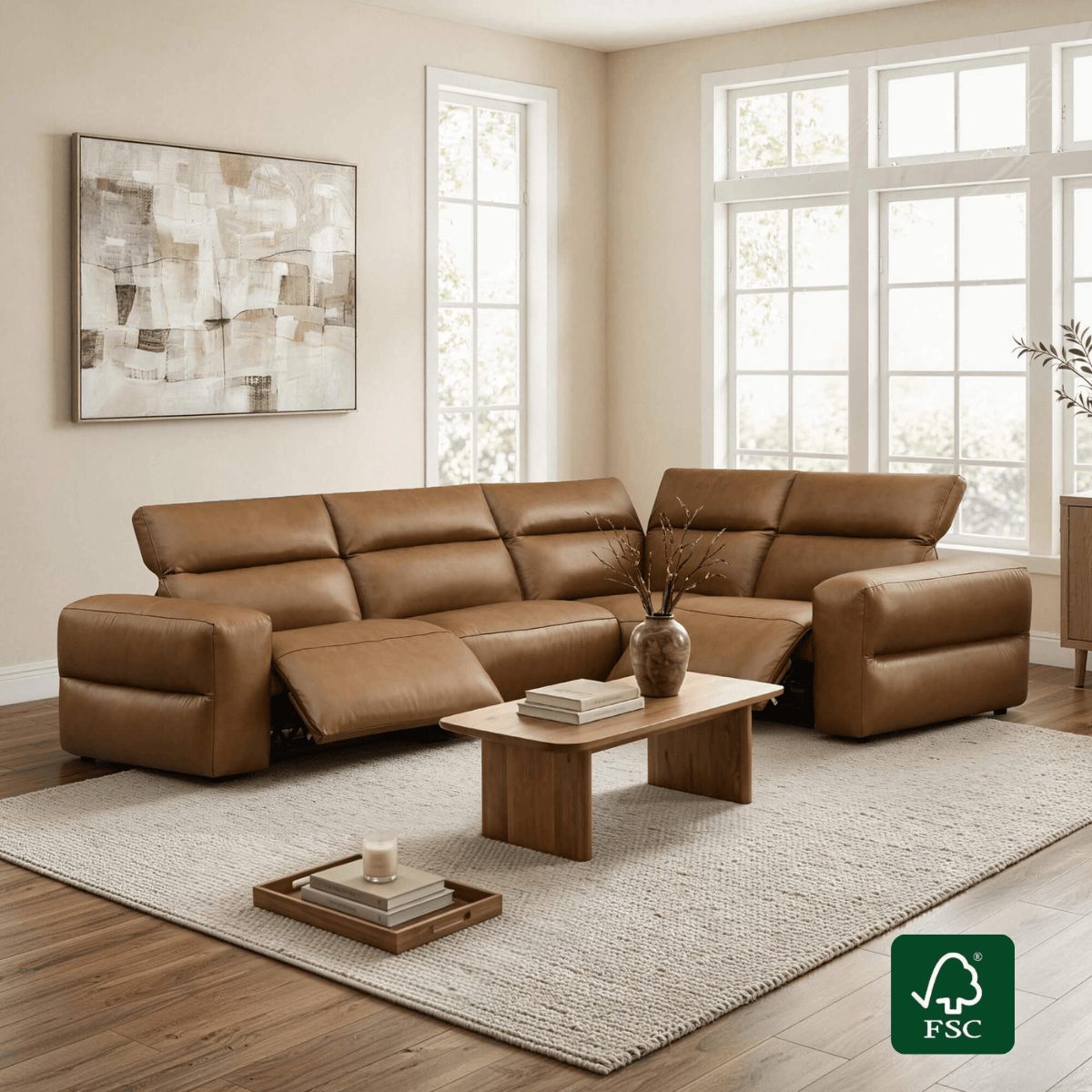
Creases and a slight sheen are signs of a healthy hide, not damage. Trying to keep leather factory-perfect usually leads to over-cleaning, which strips natural oils and causes the cracking people fear. Let the material age, and it will reward the patience. A sofa that has hosted a decade of birthdays and quiet Sundays will look different from the showroom model, and that difference is exactly what makes a room feel lived in rather than staged.
A Purchase That Gets Better With Time
Choosing a leather couch is less about chasing a trend than about selecting a material that will keep its shape while the rest of the room changes around it. Focus on the grade of the hide, sit long enough to judge the cushions, and match the frame and color to the way your household lives. Busy homes benefit from finished top-grain covers and easy-clean lines, while quieter spaces can indulge in softer, more natural surfaces. With weekly dusting and occasional conditioning, the sofa will develop the kind of patina that makes a living room feel collected rather than decorated. Bought well, leather is not a cost spread over years; it is a piece that quietly becomes the most familiar seat in the house.