
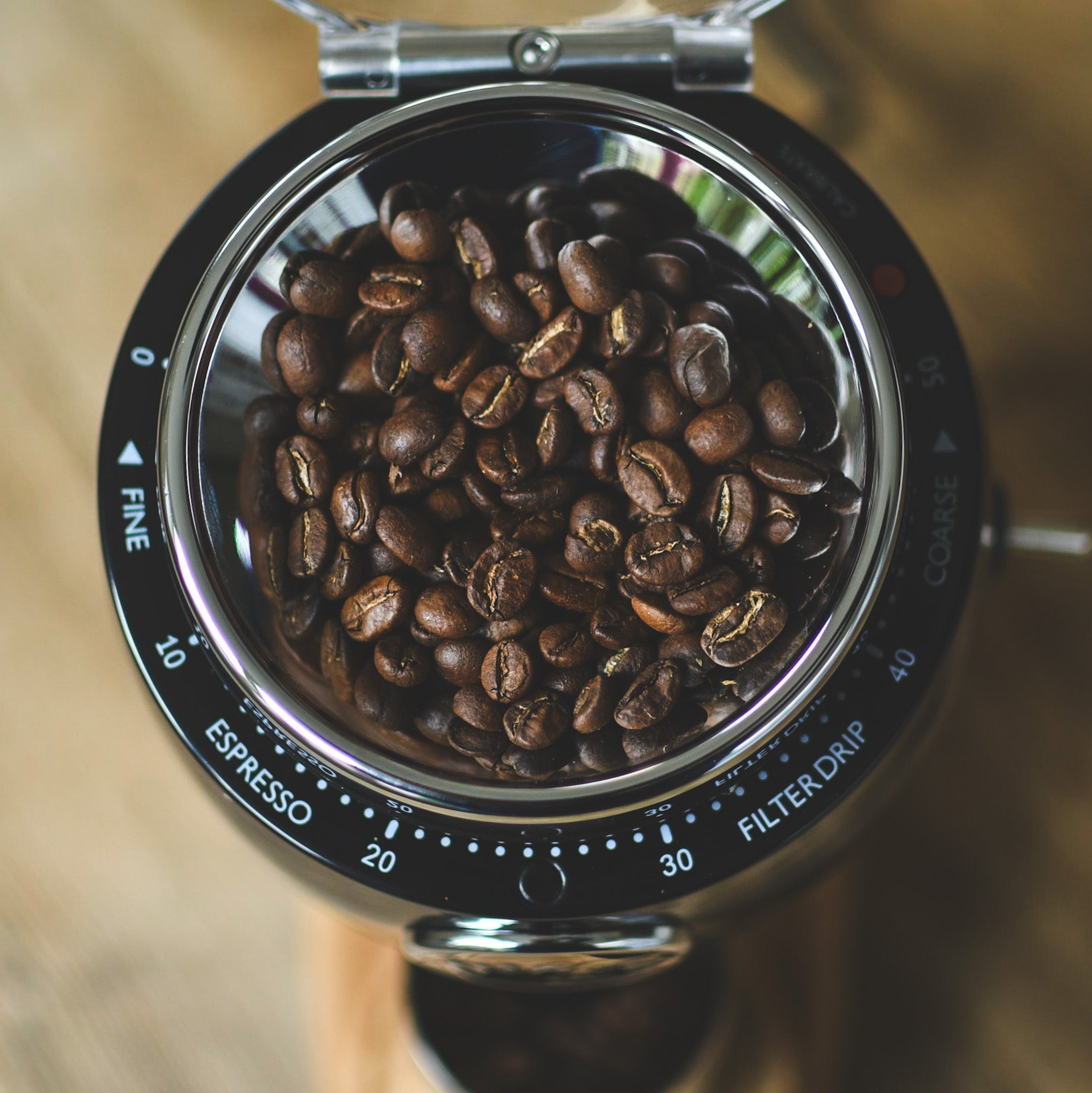
You are standing in a coffee shop with two bags of the same roast in front of you. Same coffee, same price, same attractive label. One is a whole bean. The other is already ground for your filter machine.
The obvious choice, according to almost every piece of coffee advice ever written, is the beans. Grind immediately before brewing. Never buy pre-ground. Freshness is everything.
That advice is directionally right. It is also considerably more dramatic than the evidence requires.
Grinding your own coffee does change something important: how quickly the coffee loses some of the volatile compounds responsible for aroma and flavour. But that does not mean pre-ground coffee becomes useless the moment it leaves the grinder. If you drink a bag quickly, use a forgiving brewing method or simply care more about convenience than extracting every last aromatic note, the difference may be smaller than the coffee internet suggests.
The useful question is not whether the whole bean is “better.” It is when the extra freshness is actually worth the extra step.
Grinding Changes the Clock
A roasted coffee bean is not chemically inert. Roasting creates hundreds of volatile compounds that contribute to the smell and flavour we recognise as coffee, while carbon dioxide remains trapped inside the porous structure of the roasted bean and gradually escapes during storage. Research measuring coffee’s volatile compounds has shown that these compounds change as roasted coffee ages, making them useful indicators of freshness.
Grinding accelerates the process because one intact bean becomes thousands of much smaller particles, dramatically increasing the amount of coffee exposed to air. Studies comparing whole, half and ground roasted coffee have found that chemical changes proceed faster in ground coffee than in intact beans, while finer particles also release volatile compounds more readily.
That is why the smell of freshly ground coffee is so immediate. You have suddenly exposed a much larger surface area, allowing aromatic compounds and trapped gases to escape rapidly.
Some of what disappears is exactly what you want in the cup. Coffee aroma is not produced by one magic “freshness compound”; it comes from a large collection of volatile substances, including aldehydes, ketones, esters, furans and other compounds whose concentrations change during storage. Studies of stored roasted coffee have documented changes in these volatile profiles alongside declining sensory quality.
How Quickly Does Pre-Ground Coffee Decline?
This is where the usual advice becomes misleading.
There is no scientifically defensible universal deadline at which ground coffee suddenly becomes stale. Temperature, oxygen exposure, moisture, packaging, roast level and particle size all affect the rate of change, and research on ground coffee shows that storage conditions can substantially alter aroma loss.
A more useful rule is that the noticeable loss of delicate aroma happens on a scale of days to weeks after grinding, while properly packaged whole roasted beans retain their sensory qualities for considerably longer, with measurable quality changes developing over months rather than immediately. Research on ground coffee has found volatile compounds to be useful markers of quality depletion during home storage, while studies of whole roasted beans show sensory changes accumulating over much longer storage periods.
That does not mean a bag ground last Tuesday is dead on Wednesday. It means that the most fragile aromatic character is progressively harder to preserve once the bean has been broken apart.
There is another reason not to obsess over a stopwatch: packaging matters enormously. Barrier packaging can slow the movement of oxygen and other gases, and studies of coffee freshness have found better protection from packaging incorporating strong oxygen barriers.
So “ground three weeks ago” tells you something, but “ground three weeks ago and sealed in a good barrier bag” tells you something more useful.
When Grinding Fresh Actually Matters
Fresh grinding makes the biggest practical difference when the coffee itself contains flavours worth preserving.
A lightly roasted specialty coffee with delicate fruit, floral or citrus notes gives you more reason to protect its volatile aromatics because those high-frequency notes are part of what you paid for. As storage progresses, studies have found positive aroma and flavour attributes declining while stale or oxidation-related characteristics become more noticeable.
The brewing method matters too, although not in the simplistic sense that one method “needs” fresh grinding and another does not.
Espresso, pour-over and other methods where you are trying to control extraction precisely make grind consistency particularly important because particle size affects how quickly water extracts compounds from the coffee. Grinding immediately before brewing gives you control over both the age and size of the particles.
But there is an important distinction between “freshly ground gives you more control” and “pre-ground coffee cannot make good coffee.” The latter is simply not true.
When Pre-Ground Coffee Is Perfectly Fine
Suppose you open a 200g bag of ground coffee and finish it in five days.
The coffee has certainly lost some volatile compounds during those five days, but you are not giving it months to deteriorate. If the bag was well packaged, stored reasonably and resealed properly, the practical difference between grinding immediately before every cup and using the pre-ground coffee may be modest enough that convenience wins. Research on storage shows that packaging and exposure conditions strongly influence how quickly coffee’s volatile profile changes.
The same applies if your coffee preference is uncomplicated. If you add milk, sugar or other ingredients and primarily want a reliable, pleasant cup rather than the subtle distinction between apricot and stone fruit, there is little reason to turn your morning routine into a laboratory.
Brewing style can also reduce the stakes. A French press or basic filter brew does not become worthless because someone else ground the beans. You may sacrifice some aromatic complexity, but you can still produce a very good cup.
And if the alternative is buying whole beans and then grinding them badly with an inconsistent grinder, pre-ground coffee may actually be the better practical choice. A consistent grind is fundamental to repeatable extraction; owning a grinder is not a virtue in itself.
The Format You Buy Matters as Much as How You Store It
There is a useful middle ground between “grind everything fresh” and “grinding doesn’t matter”, and it starts with a decision that happens before storage even comes into play: whether you buy whole beans or pre-ground in the first place.
Buying whole beans does not guarantee freshness on its own. What it guarantees is control. A whole bean bag lets you decide exactly when the volatile-compound clock starts running, because grinding is the step that accelerates it; you are choosing the moment, rather than inheriting whatever moment a pre-ground bag already had baked in before it reached the shelf. A range like Grumpy Mule’s coffee beans illustrates the format distinction well: buying whole beans puts that timing decision back in your hands, however you choose to use it.
That control has nothing to do with whether the coffee is organic. Organic certification concerns how the coffee is grown and processed, not whether its volatile aroma compounds behave any differently over time. A bag from Grumpy Mule’s organic coffee selection, whole bean or ground, follows exactly the same storage chemistry as any other coffee, as the certification is a separate question entirely from how quickly it stales.
The Grinder Is a Tool, Not a Personality Test
Whole bean coffee is worth choosing when you want maximum control and want to preserve as much of the coffee’s delicate aromatic character as possible.
But if grinding your own coffee makes you late for work, creates another piece of equipment to clean or simply turns something you enjoy into a chore, buy it ground.
The coffee does not know whether you ground it yourself.
It only knows what happened to it afterwards.